
Théâtre de l’Île-Saint-Louis
39 Quai d’Anjou, 75004 Paris, France
The Théâtre de l’Ile Saint-Louis Paul Rey is one of the smallest performance halls in Paris. It showcases a broad range of genres, from music to theatre, from poetry to variety. It seats a total of about 30 people on plush, red velvet theatre seats. The box office opens about 30 minutes before the show.
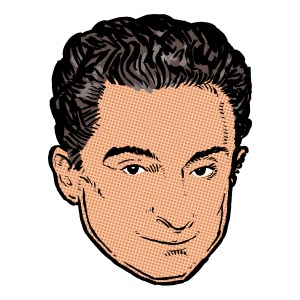
Robert Porte (COMÉDIENS)
29 Quai d’Anjou, 75004 Paris, France
Robert Porte made his acting debut in the theatre, playing a monk in Emmanuel Roblès’ Montserrat at the Théâtre Montparnasse in 1948. He was a regular performer on the stage of the Centre dramatique de l’Est in Colmar during the early 1950s. He would return to Paris and had early successes in the cinema, playing the role of Charles IX in the 1954 film La Reine Margot alongside Jeanne Moreau, Armando Francioli and Henri Génès. He teamed up again with Moreau in Les hommes en blanc (1955). In the 1960s he worked on the famous Angelique series of films with his neighbour Michele Mercier (45 Quai de Bourbon). On television he appeared in multiple episodes of Les cinq dernières minutes and En votre âme et conscience.
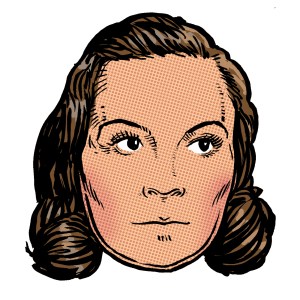
Michèle Morgan (COMÉDIENNES)
2 Rue Saint-Louis en l’Île, 75004 Paris, France
Film and theatre actress Michèle Morgan was a leading lady for three decades in both French and Hollywood films. She is considered one of the greatest French actresses of the 20th century. Morgan was first noticed by director Marc Allégret, who offered her a major role in the film Gribouille (1937). Upon the invasion of France in 1940, Morgan left for the United States and Hollywood where she was contracted to RKO Pictures in 1941. Voted ten times by the public as “the most popular French actress”, she was also the first actress to receive the Best Actress Prize at the first Cannes Film Festival in 1946 for her role as Gertrude in the film La Symphonie pastorale (1945). For her contribution to the motion picture industry, Morgan has a star on the Hollywood Walk of Fame. From the 1970s onwards she devoted more of her time to painting, a passion which dates back to her meeting with the Franco-Polish painter Moïse Kisling in the United States.

Van Doude (COMEDIENS)
3 Rue Saint-Louis en l’Île, 75004 Paris, France
After the Second World War, Dutch actor Van Doude came to Paris, where he took acting lessons from Louis Jouvet. From the late 1940s onwards he worked in numerous Paris theatres. He made his film debut in 1949 with a small role in Mission à Tangier alongside Raymond Rouleau. Van Doude worked mainly in France, but also internationally, including as the hapless admirer of Audrey Hepburn in Billy Wilder’s romantic comedy Ariane (1957). In the 1960s, Doude took supporting roles in several classics of the Nouvelle Vague: À bout de souffle (1960), Je t’aime, je t’aime (1968) and La mariée était en noir (1968). He also starred in works by directors such as Roger Vadim, Yves Boisset, Claude Sautet, Costa-Gavras, Terence Young, Fred Zinnemann, Jules Dassin and Sydney Pollack. From the 1970s onwards Doude’s film roles became smaller, his last appearance was in Un coeur en hiver (1992).
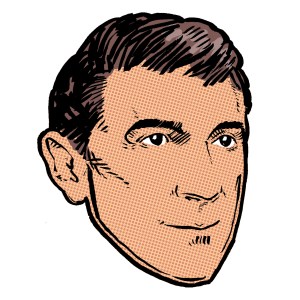
Jean Pignol (COMEDIENS)
1 Bd Henri IV 4e, 75004 Paris, France
Jean Pignol first hit the cinema screens as a teenager, making his debut in Jean Delannoy’s Fièvres (1942). Despite enjoying regular work on the French film scene in the 1940s, he went back to school to study at the Conservatoire national supérieur d’art dramatique. It was a successful venture, earning him prizes in both 1949 and 1950. It would spark a short lived career in the theatre but he would return to his first love, film. Pignol enjoyed a 50 year career in the cinema and on TV, bowing out in 1990. From 1960 onwards he was popular director for television, taking control of multiple series: La joie de vivre (1969-1970), Aubrac City (1971-1972), Chéri-Bibi (1974), La famille Cigale (1977), Marion (1982) and Maguy (1985-86).
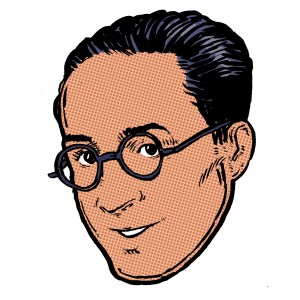
Pierre Ferrary (CHANSONNIERS)
18 Quai de Béthune, 75004 Paris, France
Like many chansonniers Pierre Ferrary had multiple strings to his comic bow. He was a lyricist, screenwriter and author of comedies and sketches. He worked in conjunction with Max Régnier, in print and on the radio. Like fellow chansonnier Roméo Carles he was a regular contributor to the humorous comic Blagues during the 1960s. In 1936 he represented the artistes of the Dix Heures Theatre for the Bal de Chansonniers at the Moulin de la Galette. Alongside him on stage was his regular partner Max Régnier, but also well known names from the variety circuit: Janett Flo, Emma Soules, Jean Rieux, Paul Maye, the great Geo Pomel, Jean Rigaux and Leon Henry. Ferrary was a regular face in the cabarets of Montmartre and well known for his witty songs and impersonations of popular personalities such as Michel Simon and Georges Guétary.
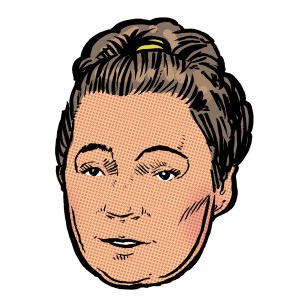
Helene Tournaire (PRODUCTEURS ET PRESENTATEURS DE L’O.R.T.F.)
36 Quai de Béthune, 75004 Paris, France
Hélène Tournaire began her journalistic journey at Studio d’Essai/Club d’Essai, the radio of the French Resistance, which in August 1944 was responsible for the first broadcasts in liberated Paris. After WW2 she wrote for the newspapers France-Soir, Combat, Paris-Presse, and also published books about the Congo and Vietnam wars. She was a regular presence on the radio, interviewing diverse personalities from Klaus Gysi, the Minister of Culture of the German Democratic Republic from 1966-73, to Jean Renoir, the French film director. Foreign countries and travel featured in both her broadcasts and books. She received the Grand Prix du Meilleur Reportage sur l’Afrique at the Festival mondial des arts nègres in Dakar for her 1963 book “Le livre noir du Congo”. She also won the Prix du Bougnat for “Poivre vert” (1970) and the Prix du Meilleur Livre pour l’Été for “Poivre rouge” (1966), both travel stories.
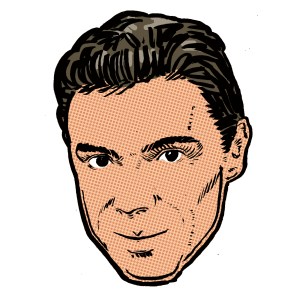
Georges Moustaki (CHANTEURS ET CHANTEUSES)
7 Rue des Deux Ponts, 75004 Paris, France
One of France’s most beloved songwriters, Georges Moustaki was known for infusing French songs with sounds from around the world. Moustaki was born in Egypt to Greek parents and moved to France when he was a teenager. He worked as a door-to-door salesman of poetry books and performed in the nightclubs of Paris, rubbing shoulders with well known performers. In 1959, he wrote the lyrics to Edith Piaf’s international hit Milord. They became lovers, with Piaf singing a number of Moustaki’s songs, including Le Gitan et La Fille and Eden Blues. In all, he wrote about 300 songs, many of them performed by some of the biggest stars in France and beyond. As a solo artist, Moustaki became popular for songs about freedom and individuality. His biggest solo hit was Le Métèque, which was number one in the charts for six non-consecutive weeks.
Valérie Quincy (COMEDIENNES)
9 Rue des Deux Ponts, 75004 Paris, France
In 1957, actress Valérie Quincy made her debut at the Comédie de l’Ouest (Rennes) in Friedrich von Schiller’s Marie Stuart. She appeared sporadically on the stages of Paris, including at the Théâtre de l’Alliance française (Ajax, 1969-60), Odéon-Théâtre de France (Les mes mortes, 1960), Théâtre des Bouffes Parisiens (Britannicus, 1962-63), Théâtre de l’Épée-de-Bois (Credo sauvage, 1967-68), and Théâtre Le Kaléidoscope (L’Échange, 1968). As well as a brief TV and film career she also appeared on a number of literary themed vinyl releases, reciting the works of Kafka, Baudelaire, Lafcadio Hearn, Marcel Béalu, Boris Pasternak and Renée Vivien.
 Guide to Paris Show Business
One response to “Walk 60 – Pont de Sully”
[…] Find out where Michèle Morgan lived on Walk 60 – Pont de Sully […]
LikeLike