
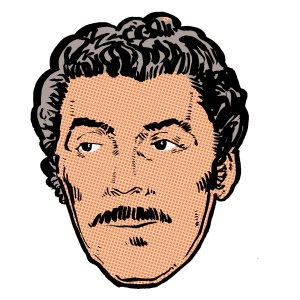
Jean-Claude Arnaud (COMEDIENS)
1 Rue du Dr Labbé, 75020 Paris, France
A fine stage actor, Jean-Claude Arnaud studied at the Centre d’art dramatique de la rue Blanche (1950) then at the Conservatoire national supérieur d’art dramatique (1953 – 1956), where he graduated with a first prize. Upon graduation he joined the Comédie-Française, becoming a member from 1968. With the troupe he had a distinguished and varied career that spanned 20 years. Although he left in 1977, he continued to work in theatre, his final production was in Ray Cooney’s Impair et père at the Théâtre de la Michodière in 2002. Arnaud had a more modest portfolio of appearances on TV and film, but like many actors of his generation he did pop up in an episode of Les cinq dernières minutes.
Linette Lemercier (COMEDIENNES)
4 Rue du Dr Labbé, 75020 Paris, France
Despite a sporadic acting career on TV, film and stage, Linette Lemercier was constantly in demand as a voice actor. She specialised in dubbing the voices of young boys including Rusty in Rintintin, the American television series which ran for 164 episodes in the 1950s. Lee Aaker played the main character Rusty, who alongside his German shepherd, were the sole survivors of a convoy attacked by Indians. It wasn’t just foreign series that she lent her voice to but also home grown animations, like the Joë series (Joë chez les abeilles, Joë chez les fourmis, Joë au royaume des mouches). A whole generation of children who grew up in the 1960s would forever know the spoken word of Lemercier who provided the main character Joë with his voice.
Jean Mollien (ARTISTES LYRIQUES)
17 Rue le Vau, 75020 Paris, France
And
5 Rue Maurice Berteaux, 75020 Paris, France
Jean Mollien won first prize at the Conservatoire’s comic opera competition in 1952. The competition took place at the Opéra-Comique, amongst the jury were Claude Delvincourt (director of the Conservatory), Maurice Lehmann (director of the Paris Opera) and Emmanuel Bondeville (director of the Opéra-Comique). A year later Mollien made his debut with the young troupe L’Ensemble Lyrique de Paris, under the guidance of Jean de Rigault and Pierre Chouvy. It was a debut for the whole company, and Mollien was a stand out performer at the Théâtre des Champs-Elysées in Marcel Landowski’s Le Rire de Nils Halérius. Later in the 1950s Mollien would join the ranks of the Marseille Opera and in the 1960s the Les Baladins Lyriques. He made a number of recordings that were released on vinyl from 1952 onwards, and are still popular today. These included performances with the Paris Philharmonic Orchestra and the Orchestre Radio-Lyrique.
Herbert Léonard (CHANTEURS ET CHANTEUSES)
57 Rue du Capitaine Ferber, 75020 Paris, France
Singer Herbert Léonard graduated from the guitar driven combos of the early 1960s (Les Jets and Les Lionceaux) to become a solo star in 1968 with his French version of Somebody to Love by Jefferson Airplane. Principally known as a singer he also has a parallel career as an author and editor, specialising in Russian aeroplanes from World War II. He released a large number of EPs in the late 60s and 70s on the Mercury label, and toured with Sylvie Vartan. He achieved another big hit in 1981 with Pour le plaisir, topping the charts and selling more than 2 million copies.
Maïté Etcheverry (Harpe)
27 Rue du Capitaine Ferber, 75020 Paris, France
Acclaimed harpist and music teacher Maïté Etcheverry studied at the Conservatoire de Paris in the mid 1950s. She published a number of exercise books for students and also released a handful of vinyl releases. These included an EP with violinist Gérard Jarry in 1964, and an LP alongside cellist Paul Madjaje in 1966.
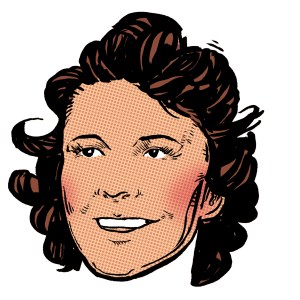
Juliette Faber (COMÉDIENNES)
19 Rue Paul Strauss, 75020 Paris, France
Born in Grevenmacher, on the banks of the Moselle river, to a Catalan father and a Luxembourgish mother, Juliette Faber was catapulted to fame at a young age. After moving to Paris with her parents from Perpignon, she was eligible to join the Conservatory, and joined the amateur troupe formed by Jean Wall and Claude Dauphin. Wall saw the potential in the 15 year old Faber and she was thrust into the limelight, making her debut in Les Jours heureux at the Théâtre Michel (Paris) in 1938. The production directed by Claude-André Puget, with its cast of talented young actors, was a tremendous success. Audience members included the President of France, Albert Lebrun, before it transferred to the Théâtre de Paris in 1939. The talents of Juliette Faber shone so bright that she was to make a sensational debut in the cinema, playing the main role in La vierge folle alongside Victor Francen (1938). She reprised her role of Pernette in the film version of Les Jours heureux in 1941. Her career in the cinema and on TV would flourish for more than 50 years. Although her time on the stage didn’t last as long there were some significant highlights, including opening the show for a Tribute to Jean Cocteau in 1947.
 Guide to Paris Show Business
One response to “Walk 49 – La campagne à Paris”
[…] Find out where Juliette Faber lived on Walk 49 – La campagne à Paris […]
LikeLike