

Henri Calef (REALISATEURS DE CINEMA)
9 Rue Jules Dumien, 75020 Paris, France
Born in Bulgaria, Henri Calef completed his secondary and higher education in France. With a degree in philosophy and a diploma from the École supérieure de commerce de Paris, he was first a film journalist before becoming the assistant of Pierre Chenal and André Berthomieu. Close to the French Communist Party, he refused to wear the yellow star during the Occupation and hid in France with the help of several screenwriters on the Côte d’Azur, including Serge de Poligny, for whom he collaborated on La Fiancée des ténèbres. He wrote his first major film with Charles Spaak, Jéricho, dedicated to resistance fighters in the Amiens prison. He then cast Anouk Aimée for the first time, in La Maison sous la mer. Henri Calef was a member of the jury at the 1954 Cannes Film Festival. In 1963, he directed L’Heure de la vérité, in collaboration with Edgar Morin and Maurice Clavel, the story of a former Nazi concentration camp commander posing as a Holocaust survivor in Israel.
Marie-Louise Vert (poètess)
127 Av. Gambetta, 75020 Paris, France
In the 1920s Marie-Louise Vert was a school teacher in the Seine (the now disbanded department) when she first published her poems. Her literary work was heralded as poetry of rare lyrical value, from a sensitive and tender soul. In 1936 she was awarded the Prix Poésie-Caravelle by the Académie Montaigne for her collection Refoulement. It was a golden year for the perpetually modest Vert, the Société des Poètes Français also honoured her with the Prix de Rohan (for her work Le Double). Her reputation grew as a poet with a generous, loving heart, and in 1949 she was awarded the Prix Montyon by the Académie Française. During the 1950s and 60 she turned more and more to writing for an audience of the purest heart, the children of France. She is known by generation for her beautifully illustrated children’s books, including Un grillon dans la lune (illustrated by Bernard Ducourant) and Floc apprend a chanter (illustrated by José and Jean-Marie Granier).
Henri Vincent Du Laurier (PRODUCTEURS ET PRESENTATEURS DE L’O.R.T.F.)
87 Rue Pelleport, 75020 Paris, France
Henri Vincent Du Laurier’s greatest contribution to French culture came from his collaboration with Jean Thévenot. The two produced one of the TV hits of the 1960s, the travel gameshow Le Grand Voyage. Replacing Pierre Sabbagh’s popular evening quiz L’Homme du xxe siècle, Le Grand Voyage presented young competitors with questions about geography, history, sociology and folklore from a range of foreign countries. In 1964 Vincent Du Laurier and Thévenot travelled across France to interview hundreds of 18-25 year old contestants who had been chosen from more than three thousand original submissions. Travel was a common theme in Vincent Du Laurier’s work; he produced several programmes for ORTF from foreign shores.
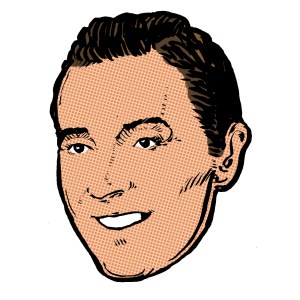
Paul Augé (ARTISTES LYRIQUES )
19 Rue Dupont de l’Eure, 75020 Paris, France
A regular on the French provincial stage, Paul Augé was the premier Tenor Léger at the Opéra de Tunis. His skills were not always appreciated by the critics. In a 1952 performance of the operetta La Belle de Cadix, in the headlining role, his performance was described as “very poorly played and sung”.
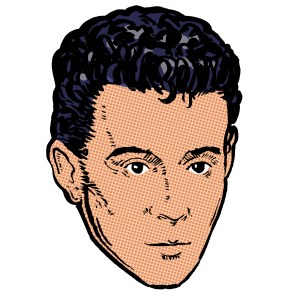
Jean-François Calvé (COMEDIENS)
91 Rue Villiers de l’Isle Adam, 75020 Paris, France
Actor Jean-François Calvé studied at the Conservatoire National Supérieur d’Art Dramatique, making his debut as a young star in both cinema and theatre in 1947. His debut in the theatre was amongst some of the greatest actors at the Comédie-Française in Molière’s Le Misanthrope. In the cinema his first film role was in Les Chouans, directed by Henri Calef, who lived nearby in Rue Jules Dumien. He toured with some of the most famous French directors from the 1950s to the 1970s; notably he embodied the “Faust” of Marguerite de la nuit by Claude Autant-Lara (1955), and played the seducer for Pierre Gaspard-Huit (La mariée est trop belle,1956 ), and with Michel Deville (Adorable Menteuse in 1962 and The Apartment des Filles in 1963). He twice partnered Brigitte Bardot in the cinema, first in Manina la fille sans voiles (1952), and then La mariée est trop belle (1956). After a 40 year career he retired from acting in 1997.
See an object that relates to Jean-Francois Calve HERE.
Roger Lemaitre (Clarinet/Saxophone)
27 Rue de la Chine, 75020 Paris, France
In the 1950s Roger Lemaitre was a saxophonist and clarinettist with Eddie Warner’s legendary Latin orchestra. As the Cha-Cha craze hit the clubs of Paris, Lemaitre played alongside a young Lalo Schifrin, the pianist and composer who would go on to be a world famous musician in his own right. Lemaitre was also a member of Jacques Hélian’s famous orchestra and in 1970 played on an album of Threepenny Opera songs that were later performed at the Théâtre De L’Est Parisien.
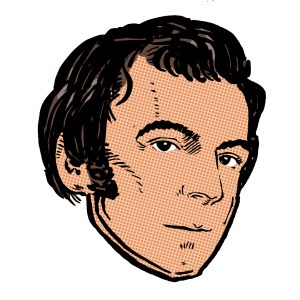
Bernard Jamet (CHANTEURS ET CHANTEUSES)
13 Rue du Cambodge, 75020 Paris, France
Singer Bernard Jamet released just a couple of singles in his own right, both on the Barclay label. He was better known for his writing, and in particular, his association with the singer Christine Pilzer, a darling of the femme pop scene. It was Jamet who co-wrote Pilzer’s first hit, Dracula, in 1966. He would subsequently write songs for Philippe Lavil, Tony Stéfanidis, Jean-François Michael, Gérard Chatelain, and Swiss singer Piera Martell.
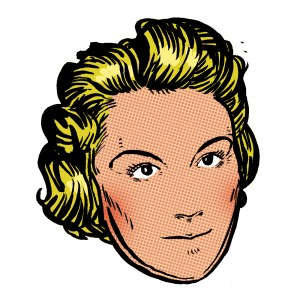
Françoise Kanel (COMÉDIENNES)
85 Av. Gambetta, 75020 Paris, France
Young actress Françoise Kanel obtained 2nd prize at the Conservatoire national supérieur d’art dramatique and was immediately engaged by the Comédie-Française. She made her debut in 1957, appearing in two plays, Le Sexe faible and Amphitryon, both directed by Jean Meyer. For the next 20 years she performed at the highest level for the Comédie-Française, the oldest active theatre company in the world. In 1980 the Comédie-Française was ordered to pay Kanel 100,000 francs in damages by the Paris court. It heralded the end of a career that had seen her play the roles of Chimène and Andromaque, amongst others, for the House of Molière.
 Guide to Paris Show Business
One response to “Walk 46 – Pelleport”
[…] Find where Jean-François Calvé lived on Walk 46 – Pelleport […]
LikeLike