
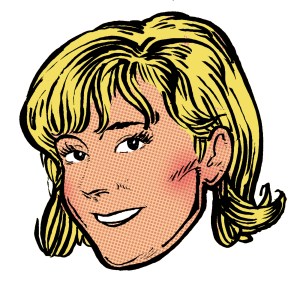
Anne-Marie Coffinet (COMÉDIENNES)
55 Rue du Télégraphe, 75020 Paris, France
Actress Anne-Marie Coffinet made her cinematic debut in the 1956 film L’auberge en folie, directed by Pierre Chevalier. This was followed quickly by her theatre debut in 21 scènes de comédie, in which she acted alongside her husband François Maistre. Although she continued with her theatre career, the 1960s being a particularly productive decade, it was in the cinema where she made her most enduring contribution. She continued to work with Maistre, including on the film Blague dans le coin, where she played a singer. Her talents as a chanteuse came to the fore on the 1970 release Le Vampire, a cult EP that we re-released for Record Store Day 2016.
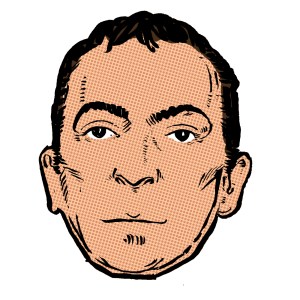
François Maistre (COMÉDIENS)
55 Rue du Télégraphe, 75020 Paris, France
Actor François Maistre is known to the French public for his roles on television, often in police drama series. One of his most notable roles was the rough and irascible character Claude Faivre in Les Brigades du Tigre. He appeared in many other TV series, amongst them perennial favourites for Paris’ acting talent, Les enquêtes du commissaire Maigret and Les Cinq Dernières Minutes. He boasted an impressive career in the cinema, that took him from the comedy Les jeux de l’amour in 1961, all the way to the thriller La fleur du mal in 2003. His time in the theatre was a little shorter but equally impressive, not just as an actor but as a director too. He made his directorial debut in 1958 with two plays, Charlie, 22 ans trompette and 21 scènes de comédie, the latter alongside his wife Anne-Marie Coffinet.
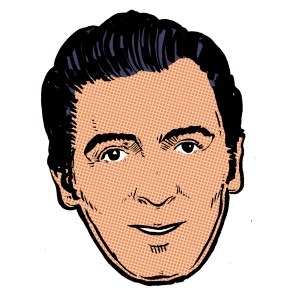
Serge Alexandre (CHANTEURS ET CHANTEUSES)
16 Rue Deveria, 75020 Paris, France
French singer Serge Alexandre was born to Russian parents, and he would turn to the motherland for the subject matter of his first album, Chansons Soviétiques. He had already released an EP with CBS in 1966 but neither the single nor the album made Alexandre into a star of the 1960s. He was soon relegated to a session singer, recording cover versions of popular songs with Daniel Janin’s orchestra.
Michel Etcheverry (COMÉDIENS)
MJC les Hauts de Belleville, 47 Rue du Borrégo, 75020 Paris, France
Michel Etcheverry was a teacher in WW2, but was fired for refusing to make the children sing Maréchal, nous voilà, the song in honour of Marshal Pétain. He then entered the National Conservatory of Music and Dance in Paris where he won awards for his acting. He began his career in the theatre as a stage manager from 1945 to 1951, then joined Louis Jouvet’s troupe. Etcheverry would join the Comédie-Française as a resident in 1961, and was named a member in 1964 (becoming an honorary member in 1984). His repertoire included numerous tragedies from the classical repertoire, notably Corneille, Racine, Shakespeare and de Montherlant. He appeared in over 140 plays in a long and distinguished career as actor, ending his time on the stage in 1995 in T. S. Eliot’s Meurtre dans la cathédrale. In the cinema Etcheverry had a successful Hollywood career, not something all French actors of the time could boast about. He also released several albums and singles as a singer, including the anthem for the 1991 Rugby World Cup.
Bernard Gesbert (REALISATEURS DE TELEVISION)
69 Rue Haxo, 75020 Paris, France
Bernard Gesbert followed the tried and tested route of first becoming an assistant director for television films, and then a fully fledged director. Early productions as an assistant included the TV series En votre âme et conscience, and Les cinq dernières minutes, all in the 1960s. He would graduate to the director’s chair in the 1970s and 1980s, taking control of both TV series and films. A talented writer too, he co-wrote the 1995 drama Poussières de vie. The film, based on a true story, was nominated for the Academy Award for Best Foreign Language Film in 1996.
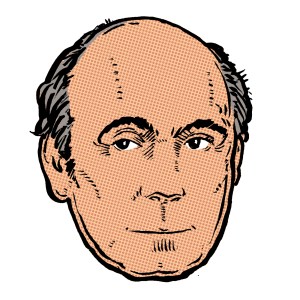
Paul Crauchet (COMEDIENS)
33 Rue Haxo, 75020 Paris, France
As a young man interested in aviation and rugby, Paul Crauchet discovered a passion for the theatre at the age of 23. He settled in Paris in 1945, he studied under Charles Dullin for three years and began on stage in 1949. He then worked at the Théâtre National Populaire with Jean Vilar. Crauchet appeared in the first film by Éric Rohmer, The Sign of Leo, in 1959, and then in 1962 in The War of the Buttons of Yves Robert. It is in The Wise Guys of Robert Enrico in 1965 that he became noticed. He had a very long career during which he worked with many directors, such as Alain Resnais, René Clément, Jean-Pierre Melville, Jacques Deray and José Giovanni. During the Algerian War, Crauchet participated in the Réseau Jeanson, the group of French activists who operated as a support group for the FLN (Algerian National Liberation Front).
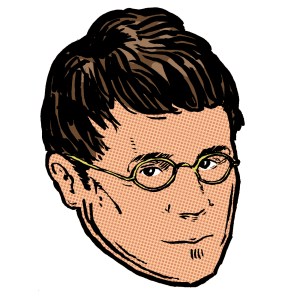
Philippe Drancy (COMEDIENS)
100 Av. Gambetta, 75020 Paris, France
The defining moment of actor Philippe Drancy’s career was his work in the 1960s with the Compagnie Renaud-Barrault. The private repertory troupe was formed in 1947 to perform experimental productions. By 1962 Drancy was firmly embedded within its ranks, appearing in La nuit a sa clarté by Christopher Fry at Odéon-Théâtre de France, but it would be his Trofinov in Anton Tchekhov’s La Cerisaie (1963) that would be one of his most memorable roles. It was a short career in the theatre and even briefer on TV, where he appeared in only a handful of films and series between 1964-67.
See an object relating to Philippe Drancy HERE.


One response to “Walk 43 – Télégraphe”
[…] Find where Philippe Drancy lived on Walk 43 – Télégraphe […]
LikeLike