
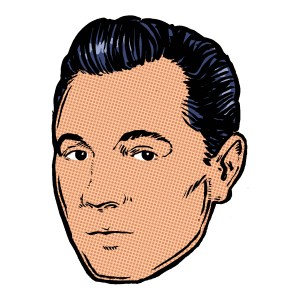
Jean Raphaël (CHANTEURS ET CHANTEUSES)
77 Av. Jean Jaurès, 75019 Paris, France
Born of Mediterranean parents, singing was part of Jean Raphaël’s life from an early age. When he first came to Paris he would frequent the bal-musette of the Bastille district, and was inspired to become a singer in the Tino Rossi style. With his matinee idol looks Jean Raphaël would go on to sing with the tango orchestras that played in the dance halls of Paris. In the late 1950s he was singing with the great tango orchestra of Héctor Grané and in the early 1960s with the orchestras of Charles Verstraete and Lulu Charleu. As the decade progressed his repertoire moved towards the classic French chanson style.
Bal-musette is a style of French instrumental music and dance that first became popular in Paris in the 1880s. In the 1930s, gypsy jazz, a rhythmic form of swing music, drew on musette styles. By 1945, the bal-musette became the most popular style of dance in France and its biggest stars were widely known across the country. Its popularity declined drastically beginning around 1960.
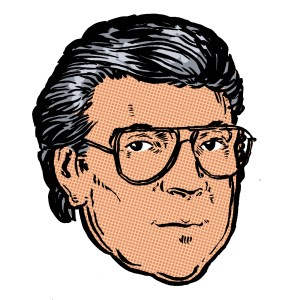
Yves Demarle (Trombone)
77 Av. Jean Jaurès, 75019 Paris, France
Born in Calais in 1946, Yves Demarle studied at the Paris Conservatoire where he won first prize for trombone. He was a soloist at the Paris Orchestra and taught trombone at the Regional Paris Conservatoire. He is known to a generation of students for his books on improving trombone technique. Demarle was a member of the Orchestre De Paris in the early years of its existence. Founded in 1967, Demarle played under the orchestra’s first conductor, Charles Munch.
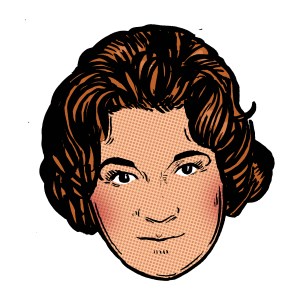
Florence Passy (CHANTEURS ET CHANTEUSES)
41 Rue Cavendish, 75019 Paris, France
Florence Passy studied piano and voice at the Conservatoire du Luxembourg but soon the draw of Paris brought her to the capital. She was introduced to the influential agent and cabaret owner Jacques Canetti who invited her to sing at his venue, Théâtre des Trois Baudets, in Pigalle. Success followed with a record deal and several 78rpm releases. At the beginning of the 1950s she met the trumpeter Pierre Sellin, who became her accompanist and husband. In the 1960s she released a number of EPs on the PBM label (Pierre Bourgeois Musique). During the 1970s, Florence Passy decided to end to her career as an artist to take care of her disabled daughter.
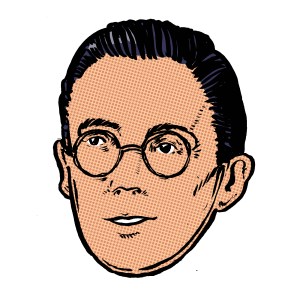
André Astier (Accordeon)
74 Rue de Meaux, 75019 Paris, France
Accordionist Andre Astier wrote around a hundred compositions, from pieces for beginners to more complicated concert pieces. A frequent collaborator he often worked with his fellow accordionists, such as Yvette Horner, Lulu Charleu, Edouard Duleu, Maurice Denoux, , Maurice Larcange, Marcel Azzola, Jo Privat, Al Lerouge, and Joss Baselli. He studied music theory, harmony, and oboe at the Conservatoire de Musique de Montluçon. When WW2 broke out he joined the Dunlop tyre manufacturing company but left aged 19 to begin his musical career in Paris. As well as being busy on the concert circuit he also devotes himself to teaching and was active in the National Union of Accordionists of France. During the 1950s and 60s he released a number of EPs on the Ducretet Thomson label, mostly in the musette style.
See an object relating to André Astier HERE.
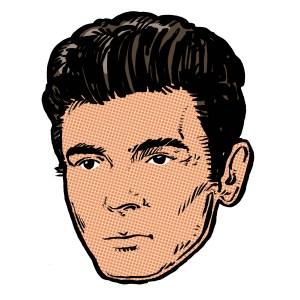
Anton Valéry (CHANTEURS ET CHANTEUSES)
7 Pass. de Melun, 75019 Paris, France
Anton Valéry moved to Paris in 1958 and soon found himself under the wing of French crooner Jean Lumière. The French lyricist Henri Varna gave Valéry his first big break, performing on the stage of the Théâtre Mogador in 1960. A popular performer on TV during the 1960s, he appeared on the programme Le Petit Conservatoire de la Chanson. He made several EPs during the decade, first for the Philips label and later for Barclay. In 1963 he represented France in the Knokke Song Festival, the forgotten rival to the Sanremo Festival and the Eurovision Song Contest. He competed in a team alongside Jacqueline Danno, Billy Nencioli, Gérard Mélet and Nicole Croisille. At the end of the 1960s he left France to sing in Quebec, Canada. On his return to France he became a singing teacher, emulating the man who taught him, Jean Lumière.
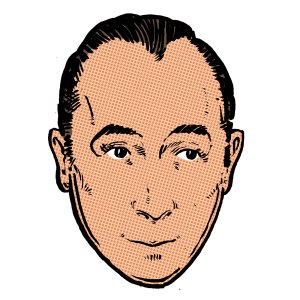
Richard Francoeur (COMÉDIENS)
47 Av. Jean Jaurès, 75019 Paris, France
Actor Richard Francoeur started his career in the theatre, playing François in Charles Méré’s Le Vertige at the Théâtre de Paris in 1922. During the 1920s he regularly performed at the Théâtre du Grand-Guignol (including 10 productions alone in 1924 and 1925). A highlight of this period was the stage version of Carl Mayer’s The Cabinet of Dr. Caligari. From the 1940s to the early 1960s he appeared in over 30 films, making his screen debut under the directorship of Jean Renoir in La Règle du jeu. His most enduring influence on the show business world was his work as a dubbing artist. He was the French voice of both Gary Cooper or Clark Gable and was working in the field until just before his death in 1971.
Dominique Santarelli (COMEDIENS)
34 bis Rue d’Aubervilliers, 75019 Paris, France
The career of Corsican actor Dominique Santarelli was defined by his long association with Jean-Louis Barrault and his troupe of thespians. He made his theatre debut with the Compagnie Renaud-Barrault in 1958 at the Théâtre du Palais-Royal in Le Soulier de satin. The play by poet Paul Claudel is famous for its length, roughly eleven hours in duration. A challenge for any actor, let alone one making his debut. Santarelli worked with Barrault for more than twenty five years, appearing in more than 40 productions until he retired in the 1990s. Although he often played supporting roles his light baritone voice made him stand out from the crowd, a voice that was compared with none other than Georges Guétary. He did occasionally make appearances on screen, more often than not in TV movies and series.
 Guide to Paris Show Business
One response to “Walk 40 – Le Bassin de la Villette”
[…] Find André Astier on Walk 40 – Le Bassin de la Villette […]
LikeLike