
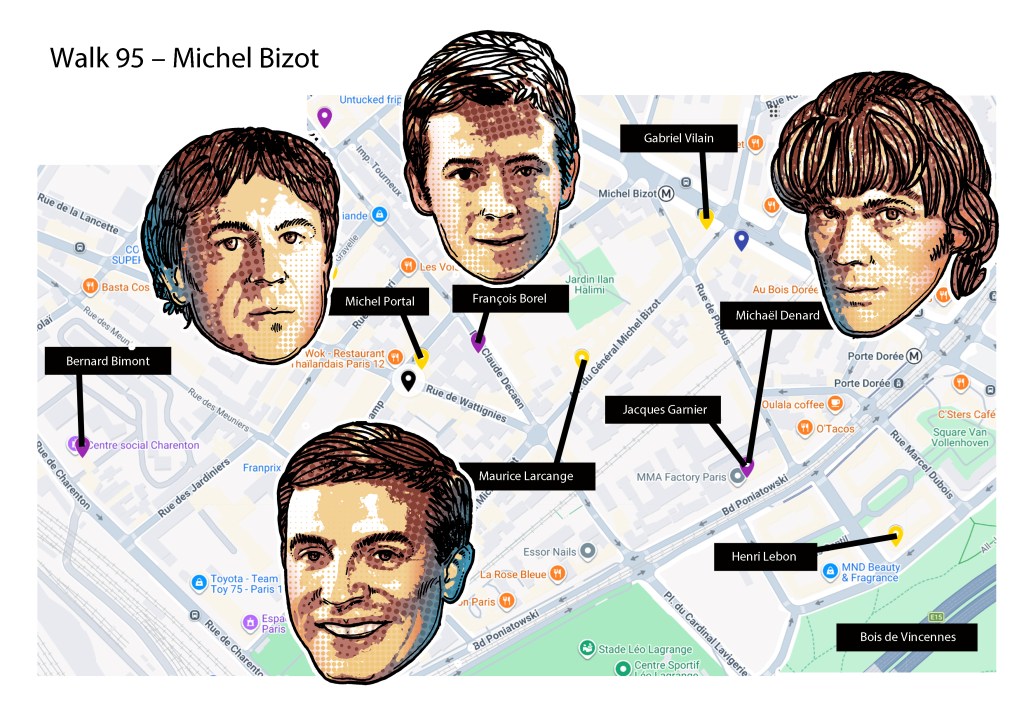
Bernard Bimont (COMEDIENS)
295 Rue de Charenton, 75012 Paris, France
Actor, theatre director, and drama teacher Bernard Bimont started his acting career in the early 1940s, both on the stage of the Théâtre de Paris and in numerous radio dramas. In the 1950s he was the director of the Compagnie d’Art Théâtral de Paris and then the own company, Compagnie Bernard Bimont. His aim was to reach beyond the capital’s boundaries, bringing quality Parisian theatre to the provinces of France, and beyond in 1953, to Istanbul, Turkey. A thespian who loved to nurture talent, Bimont led drama courses with many high profile students (Gérard Darmon, Dominique Dimey, Françoise Faucher, Georges Groulx, Lissa Pillu, etc) profiting from his great knowledge and expertise.
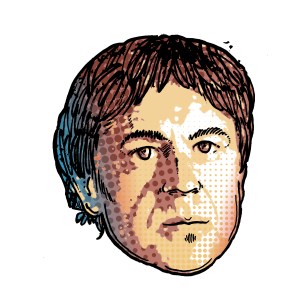
Michel Portal (Saxophone)
69 Rue de Wattignies, 75012 Paris, France
Although multi-instrumentalist (clarinets, saxophones, bandoneon, etc.) and composer Michel Portal is considered the father of the French modern jazz scene he was an artist who transcended musical boundaries. A true musical chameleon, he was equally comfortable from cavernous classical concert halls to intimate jazz clubs. Portal collaborated with the greatest names in French jazz, Martial Solal, Daniel Humair, Henri Texier, Richard Galliano, while also interpreting contemporary compositions by Stockhausen, Kagel, and Boulez. He was well known for his film scores, winning the César Award for Best Music Written for a Film three times (his first win was for Le Retour de Martin Guerre). In 1969, Portal co-founded the free improvisation group New Phonic Art and a couple of years later the long-lived Michel Portal Unit, a structure designed to have European and American musicians meet in a freely improvised setting.
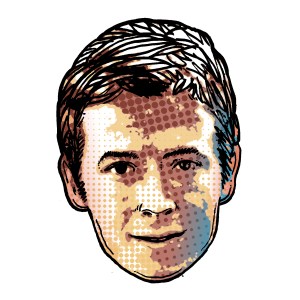
François Borel (COMEDIENS)
29 Rue Claude Decaen, 75012 Paris, France
François Borel enjoyed a relatively brief acting career during the 1960s. On the Parisian stage he appeared in productions at the Théâtre des Bouffes Parisiens, Théâtre de la Michodière, and Théâtre Marigny. Running parallel to his theatre work he also played small roles on television, including in Les sept de l’escalier 15 (1967), the sitcom about seven families who share a small suburban building.
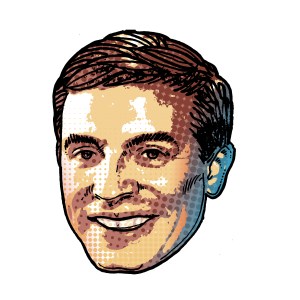
Maurice Larcange (Accordeon)
51 Av. du Général Michel Bizot, 75012 Paris, France
In the post war years, accordionist Maurice Larcange found fame in Germany with a string of popular musette style releases on the Polydor label. Cashing-in on the quintessential Parisian musette style that was so beloved around the world, he released over 100 records, and composed many more, including La marche des footballeurs ( with André Verchuren), Génération musette, Pistonette, C’est bon le madison, Paris musique, Paris musette, La grande Valse, Capricieuse, Look Musette, etc. He won the Grand Prix du Disque from the Académie Charles Cros in 1969, and played a significant role in the revival of musette music in France for the rest of his life.
Gabriel Vilain (Trombone)
256 bis Av. Daumesnil, 75012 Paris, France
In the 1950s, trombonist Gabriel Vilain was a popular member of big band brass sections across Paris. The French capital attracted the best in American jazz at the time, including Quincy Jones, who Vilain recorded with in 1957. At the time Jones was living in Paris, studying composition under Nadia Boulanger, and working as an arranger for Barclay Records. Paris was a hot destination for music lovers, and Vilain’s swinging trombone was an essential ingredient for bandleaders Claude Bolling, Géo Daly, Eddie Barclay, and Martial Solal.
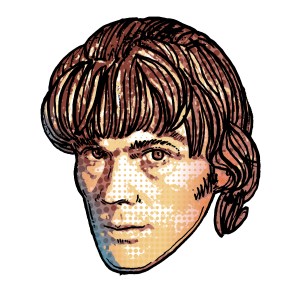
Michaël Denard (DANSEURS)
93 Bd Poniatowski, 75012 Paris, France
A performer of intense passion, Michaël Denard was a dancer, actor, and teacher with thirty-five years of presence on the stage of the Paris Opera. One of the unforgettable figures of live performance, he auditioned for the corps de ballet of the Paris Opera Ballet in 1966 and quickly rose through the ranks: coryphée in April 1967, Soloist in March 1968, Principal Dancer in March 1969, and “étoile” in 1971. It was for him that Maurice Béjart created The Firebird in 1970, set to the music of Igor Stravinsky. In 1971, he was nominated as principal dancer in New York, where he was invited by the American Ballet Theatre for its summer season. That same year, he received the Nijinsky Prize. Later in his career Denard was a teacher and dance master at the Paris Opera.
Jacques Garnier (DANSEURS)
93 Bd Poniatowski, 75012 Paris, France
Sharing ‘digs’ with Michaël Denard is fellow dancer Jacques Garnier. He followed a similar path to his flatmate, first as a member of the corps de ballet at the Paris Opera, then moving to the USA, where he trained in the techniques of Alvin Ailey and Merce Cunningham. In 1972, he founded the Théâtre du Silence with Brigitte Lefèvre in La Rochelle and the Groupe de recherche chorégraphique de l’Opéra de Paris (GRCOP) when he returned to Paris.
Henri Lebon (Flute)
1 Av. du Général Laperrine, 75012 Paris, France
Flautist Henri Lebon studied at the Paris Conservatory before starting his career at the Moulin Rouge, performing in silent films and playing on wax cylinder recordings. During WW2 he was deported to Stalag IX-A alongside fellow French musicians Olivier Messiaen, Rémi Coton, Jean Selmer, and others. He played flute as a soloist with the Orchestre de la Société des Concerts du Conservatoire, the ORTF orchestra, and the Orchestre Symphonique de la Garde Républicaine. He was appointed professor at the École Normale de Musique de Paris, the conservatoire de Valenciennes, and the Saint-Maur-des-Fossés Conservatory.
Bois de Vincennes
The Bois de Vincennes is the largest green space in Paris. It contains an English landscape garden with four lakes; a zoo; an arboretum; a botanical garden; a hippodrome or horse-racing track; a velodrome for bicycle races; and the campus of the French national institute of sports and physical education. The park is known for prostitution after dark.
 Guide to Paris Show Business