
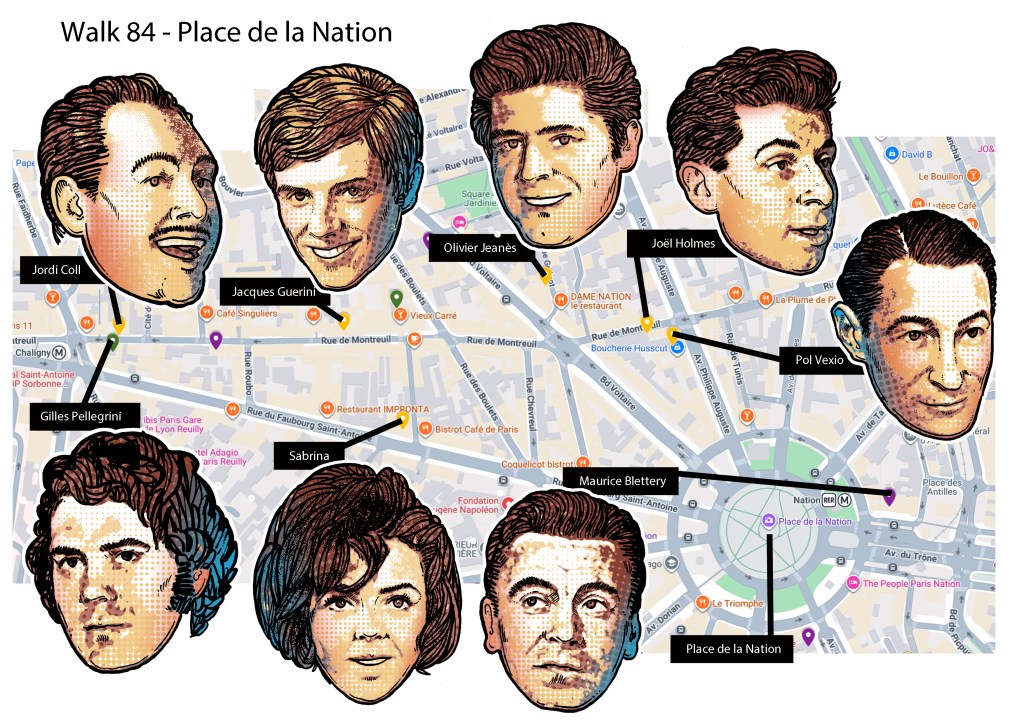
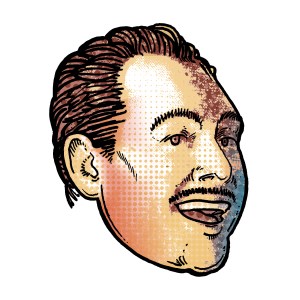
Jordi Coll (CHEFS D’ORCHESTRES)
21 Rue de Montreuil, 75011 Paris, France
Bandleader Jordi Coll fronted one of the hottest mambo orchestras of mid-century Paris. Known as the Roi du Mambo, Coll and his Orchestre Typique were a regular fixture at the Moulin Rouge during the height of the Latin dance craze in Europe. His early entertainment appearances were as a ‘Mexican’ singer, but he was more comfortable as a trombonist, playing in the 1960s band Les Gros Minets, and leading his Mamboseros in the 1950s.
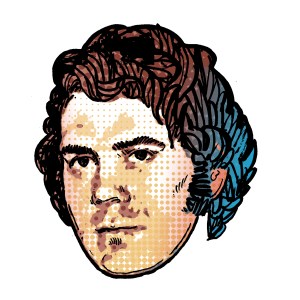
Gilles Pellegrini – Trompette
16 Rue de Montreuil, 75011 Paris, France
Gilles Pellegrini was an in demand trumpet player, bandleader, touring musician and recording artist. Although he studied clarinet at the conservatoire de Grenoble he also played the bandoneon, saxophone, and trombone, but it was the trumpet where his heart lay. In the 1960s he was a member of Les Blackburds, Johnny Hallyday’s backing band. Pellegrini formed several bands, including funk soul outfit The STEW, and his orchestras released more than a hundred cover version albums on the Les Tréteaux label.
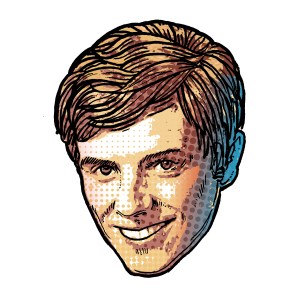
Jacques Guerini (CHANTEURS ET CHANTEUSES)
51 Rue de Montreuil, 75011 Paris, France
Italian singer and actor Jack Guerrini (real name Giacomo Guerrini) was a member of the popular musical and comedy group I Brutos in the 1950s but moved to Paris in the 60s to pursue a solo singing career. Inspired by the famous American coupling of Dean Martin & Jerry Lewis, Guerrini started his career as part of a double act with Ettore Bruno. In the late 1950s the duo joined three other performers from Turin’s club scene to form I Brutos. As a five piece they achieved worldwide success, performing on Broadway and touring alongside Diana Dors throughout the US. In 1964 Guerrini left the group to dedicate himself to a solo singing career. In Paris he signed to Barclay and released a handful of EPs under the pseudonym Jacques Guerini. He returned to Turin in the 1970s and died after being involved in a road accident.
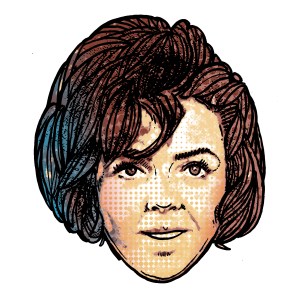
Sabrina (Mlle Thérèse Teranova) (CHANTEURS ET CHANTEUSES)
283 Rue du Faubourg Saint-Antoine, 75011 Paris
In the 1960s Paris was awash with aspiring singers wishing to hit the bigtime. Thérèse Teranova, known by her stage name Sabrina, made her recording debut on the Philips label in 1962 before releasing several more EPs with Barclay. She would have more success in Spain, when she moved to the Belter label in 1965. After more than 10 single releases on the Iberian Peninsula she slipped into obscurity in the early 1970s.
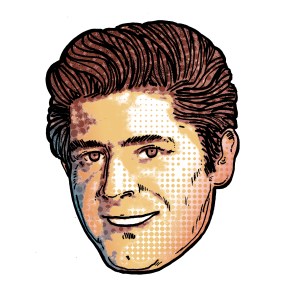
Olivier Jeanès (CHANTEURS ET CHANTEUSES)
241 Bd Voltaire, 75011 Paris, France
The Davy Crockett craze that swept across the world in the 1950s transformed the life of teenage singer Olivier Jeanès. In April 1956 the first of the Davy Crockett films, Roi des trappeurs, hit French cinemas. Cashing in on the Crockett fervour, Le Petit Ménestrel released an audiobook with lead vocals by sixteen year old Olivier. A year later he released his debut solo EP and followed up with two more on the Vega label. Jeanès continued to release EPs with both Polydor and RCA into the mid 1960s, yet despite winning a Belgium Festival International de la Chanson he never hit the big time. Born in Paris, he was a popular performer in the city, singing at the Fontaine des 4 Saisons, Eschelle de Jacob, and even the showbiz mecca Olympia.
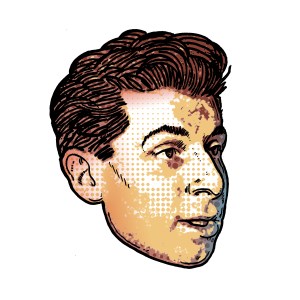
Joël Holmes (CHANTEURS ET CHANTEUSES)
82 Rue de Montreuil, 75011 Paris, France
Originally from Bessarabia, then part of Romania, Joël Holmes immigrated to France with his family in 1934. He was orphaned during WW2 when his parents were deported to Auschwitz, he was just 14 years old. To make ends meet he worked several jobs (electrician, salesman, photographer, etc.) before taking acting classes and beginning his singing career. Holmes sang in various Parisian cabarets but it was his victory on the show Numéros 1 de demain, organised by the radio station Europe 1, that gave him his first recording contract in 1959. Although he won the Grand Prix of the Charles-Cros Academy in the 1960s, he gave up singing before the end of the decade.
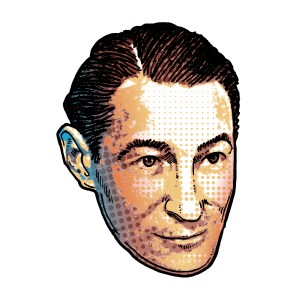
Pol Vexio (CHANSONNIERS)
15 Av. Philippe Auguste, 75011 Paris, France
One-arm caricaturist Pol Vexio was one of the many talented performers that came out of the creatively fertile Parisian district of Montmartre. A chansonnier, poet and artist, one critic observed that, “he can draw Mussolini’s head from a crescent moon and Hitler’s from a gallows”. Vexio’s visual art is much sought after nowadays, particularly the posters he created for the likes of tap-dancer Jacques Bense, variety artist Champi and fellow chansonnier Jean Valton.
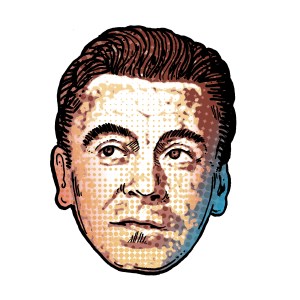
Maurice Blettery (REALISATEURS DE TELEVISION)
3 Av. du Trône, 75011 Paris, France
Producer and director Maurice Blettery helped Jazz reach a wider public audience in France during the 1950s and beyond. Blettery wrote and narrated France’s first regular TV series on jazz, À la recherche du jazz. Guests on the programme included Jean Cocteau, Michel Legrand, Sacha Distel and singer Christiane Legrand. Alongside his pioneering TV work Blettery was a cameraman on films such as Le dernier Robin des Bois (1952) and Bob le flambeur (1956).
Place de la Nation
On 22 June 1963, the magazine Salut les copains organised a concert at the Place de la Nation, featuring Johnny Hallyday, Richard Anthony, Eddy Mitchell and Frank Alamo, to name just a few. It attracted over 150,000 young people. The headline of the following day’s issue of the journal Paris-Presse read, “Salut les voyous!”.
 Guide to Paris Show Business