
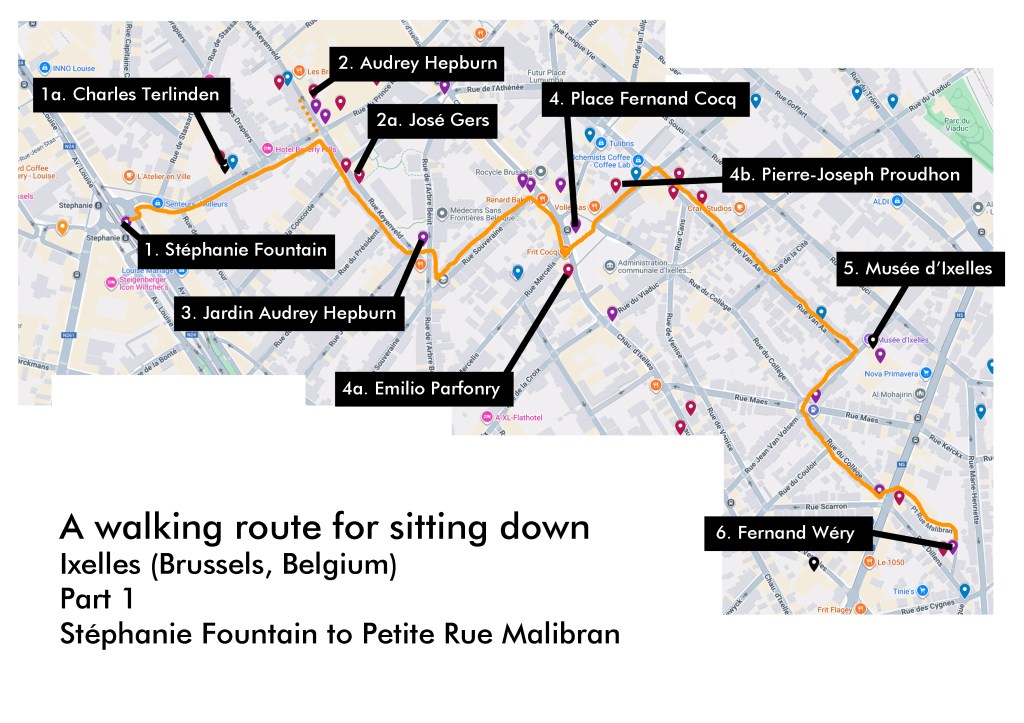
- The Royal Connection: Stéphanie Fountain and Rue du Prince Royal
Av. Louise 65, 1050 Bruxelles, Belgium
Seating: six benches beside the Stéphanie Fountain (24 hour).
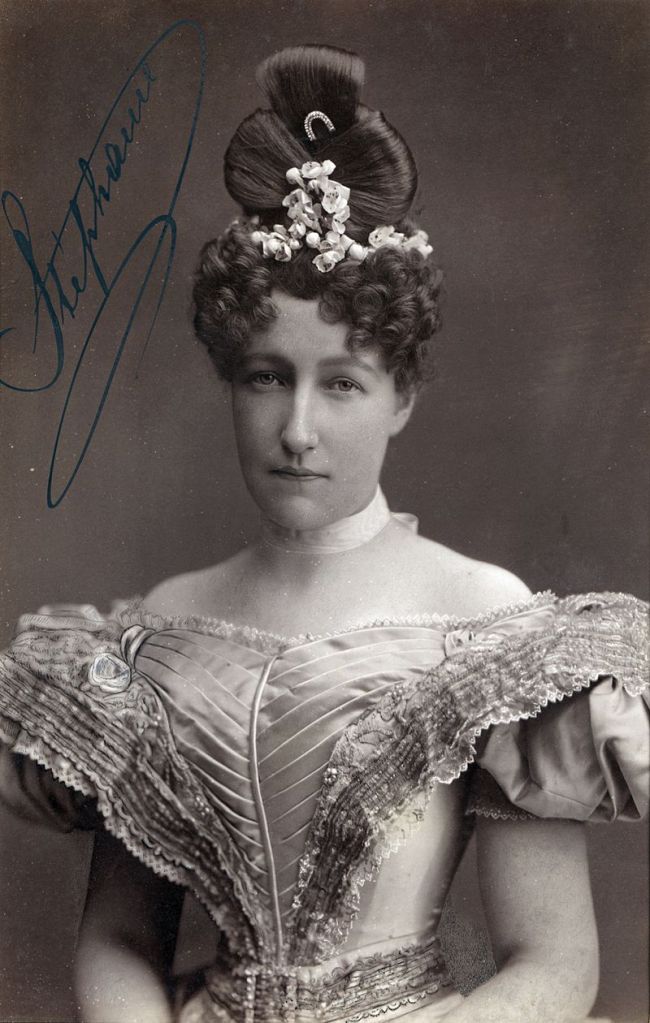
The fountain here and the Place nearby are named after Princess Stéphanie (1864-1945) of Belgium, the second daughter of King Leopold II. The Avenue Louise, which surrounds the fountain, is named after her older sister, Princess Louise. The fountain is one of only four in Brussels which remain operational throughout the year.
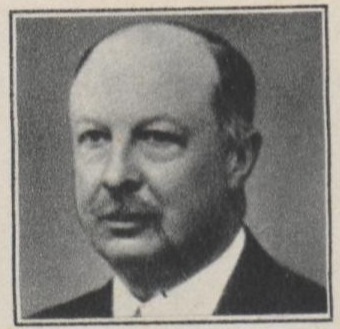
1a. Continuing the royal theme, as you walk along Rue du Prince Royal, you will find several addresses with regal connections. No.85 was the home of the historian Charles Terlinden. Born into a Belgian noble family, he was a prolific author, with a bibliography that includes more than eight hundred titles of books and articles. His close ties with the Habsburg imperial family (who were exiled in Belgium) earned him the title of Knight of the Golden Fleece in 1954. His literary works include books on Isabella Clara Eugenia of Austria, and Charles V.
1b. Sit Down on the benches at the corner of Rue du Prince Royal and Rue Keyenveld (24 hour).
- A Star is Born: Rue Keyenveld
Rue Keyenveld 56, 1050 Bruxelles, Belgium
Seating:
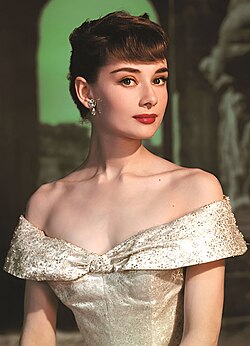
From Princess Stéphanie to the Queen of the silver screen, Audrey Hepburn. At No. 48 you will find the house where she was born. Hepburn was born into an aristocratic family, her mother was Baroness Ella van Heemstra. She would go on to become one of the most iconic film stars of the 1950s and 60s, combining elegance, warmth, and a distinctive acting style. Roman Holiday (1953) made her a Hollywood sensation and earned her an Oscar. Roles in Sabrina, Breakfast at Tiffany’s, Funny Face, and My Fair Lady sealed her reputation as one of the most adored figures in cinema.
As you make your way down Rue Keyenveld look out for No. 72 where the Belgian painter, journalist and poet José Gers (1898-1961, real name Joseph Segers) lived. His adventurous spirit is reflected in his art, he lived for many years in the M’Zab and later in the Congo, and his poems are influenced by his life as a sailor, with almost his entire oeuvre devoted to the sea.
Your next bench is in the Jardin Audrey Hepburn, which is located at the end of Rue Keyenveld.
- The Sacred Tree: Jardin Audrey Hepburn
Rue Keyenveld 125, 1050 Ixelles, Belgium
Seating: multiple benches in the Jardin Audrey Hepburn
You’ll find several benches in the Jardin Audrey Hepburn, which was created in tribute to the Oscar-winning actress. Located at the corner of Rue Keyenveld and Rue de l’Arbre Bénit, the garden has a playground designed for young children. The original Arbre Bénit or Sacred Tree sat on a hill at the intersection of the Rue Defacqz and Rue Veydt. Sick children were placed on its branches after the rain, and drips from the old lime tree would cure their ailments.
Further along this road, where the Rue de l’Arbre Bénit crosses Rue Mercelis was the location of the Sœurs de l’Arbre Bénit, a religious school for young girls. Its magnificent garden boasted a grotto dedicated to the Virgin Mary, and several interesting botanical specimens such as aucuba, agaves, and a ginkgo biloba. Keep an eye out for any interesting plants in the gardens you see.
Turn into Rue Souveraine and head towards Chaussée d’Ixelles. You’ll find plenty of benches at the Place Fernand Cocq. Also cafes too, if you need something to eat or drink.
- Creative Corner: Place Fernand Cocq
Pl. Fernand Cocq 29, 1050 Ixelles, Belgium
Seating: multiple benches in the parc Malibran
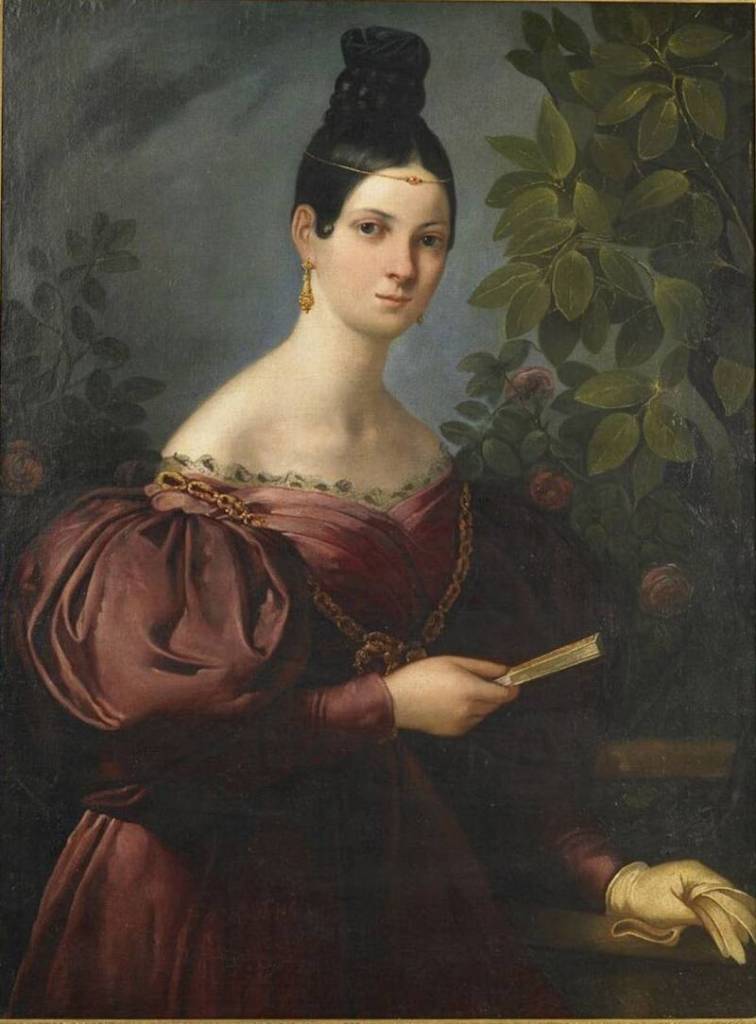
This triangular square sits in front of Ixelles town hall. The town hall was originally called the Pavillon Malibran, a private residence that was built in 1833 for the violinist Charles-Auguste de Bériot, and the opera singer Maria Malibran.
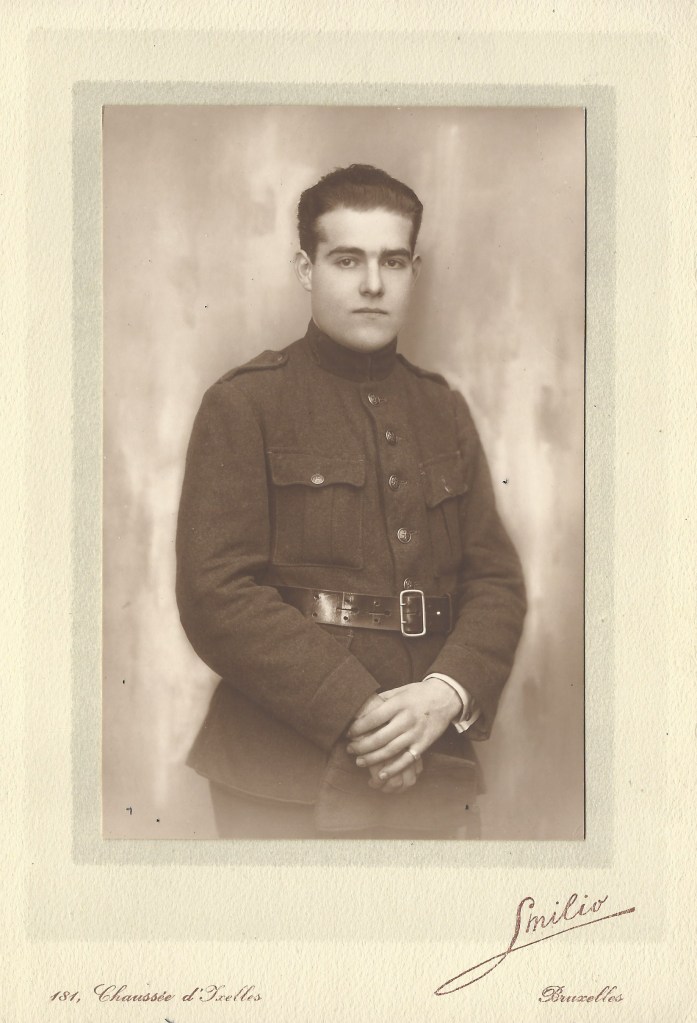
Sitting on the square, look across to the far side of the Chaussée d’Ixelles and you’ll see No.181. This was the studio of photographer Emilio Parfonry (1894-1969), better known as Emilio. Parfonry photographed the everyday families of Ixelles as well as more famous names like writer Neel Doff (1858-1942), who lived at 16 rue de Naples. Other famous subjects included the actor Lucien Mussière (1890-1973) and the Belgian Member of Parliament Marc Somerhausen (1899-1992).
Parfonry wasn’t the only photographer to work on Chaussée d’Ixelles, there was also René De Man (No.42), Corneille De Vliegh (No.60), André Neu (No.145) and Emile Baur (No.224 & 257).
Your next destination is the Musée d’Ixelles, where you’ll find places to sit, a toilet and plenty of art to enjoy. From the Parc Malibran walk up Rue du Conseil and then take a right along Rue Van Aa.
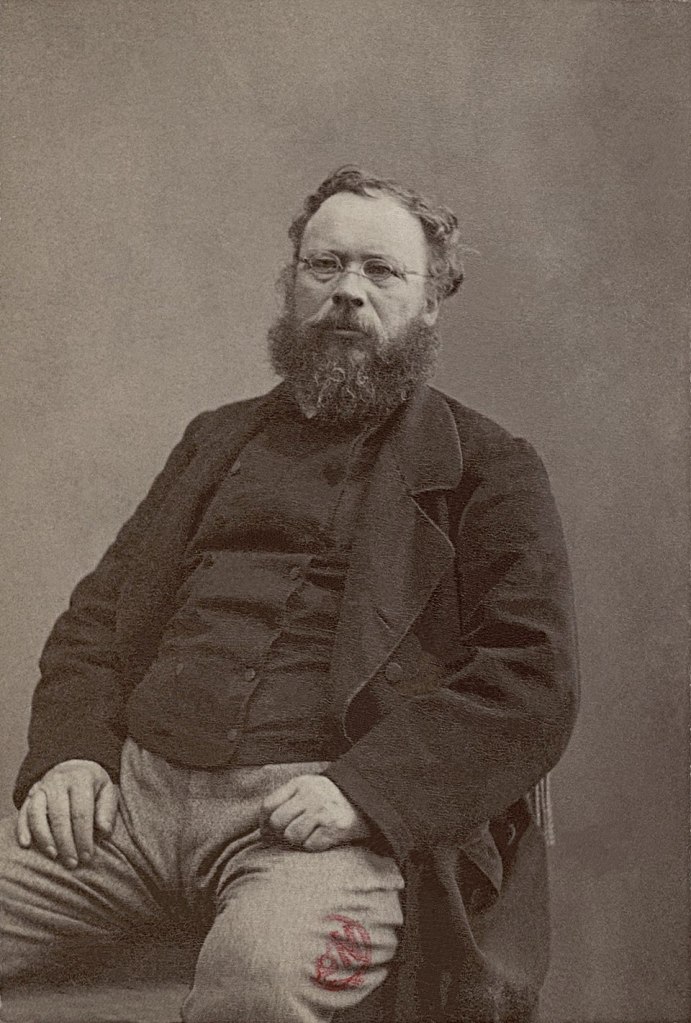
No. 8 Rue du Conseil was the home of the anarchist writer Pierre-Joseph Proudhon, who lived here in exile with his family in 1858. In Rue Van Aa you’ll walk past the houses of sculptor Julien Dillens (No.8), painter Henri Van Seben (no.9) and painter and lithographer François Stroobant (no.22).
- Musée d’Ixelles
Rue Jean Van Volsem 71, 1050 Ixelles, Belgium
Seating: outside in courtyard and inside during opening hours
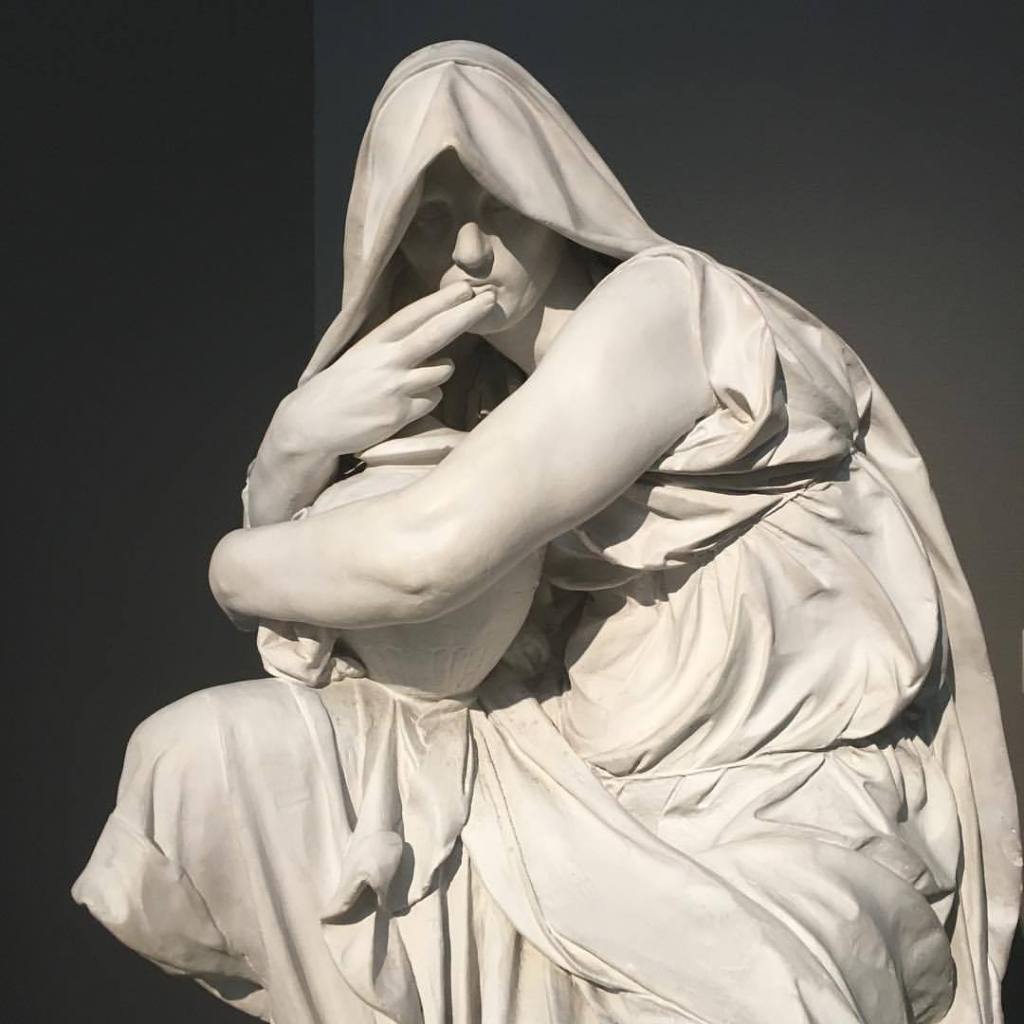
The Museum of Ixelles is a municipal art museum focusing on Belgian art from the 19th and 20th centuries. In the museum you’ll find exhibits by some of the artists whose homes you just walked past. This includes the artwork Le silence de la tombe by Julien Dillens, a one-third size version of his sculpture which sits at the the entrance to the Saint-Gilles cemetery in Uccle. The female figure sits in sepulchral silence, an urn clutched to her chest, with two fingers pressed to her lips.
You’ll also find François Stroobant’s watercolour Les anciens étangs d’Ixelles. At the end of this walk you’ll be able to see Ixelles’ ponds with your own eyes.
If the museum is closed and you really need to sit down then there are some large rocks at the Place Henri Conscience to perch on.
Head down Rue du Collège to the corner of Rue Maria Malibran where you’ll find two benches outside the artisanal beer emporium the Malting Pot.
- Olympic Artistic: Rue Dillens
Rue Maria Malibran 32 & Petite Rue Malibran 12
Seating: 24 hour bench on Rue Maria Malibran or benches and picnic table at the end of Petite Rue Malibran.
Although you can sit outside the Malting Pot on Rue Maria Malibran, I would head down the Petite Rue Malibran, a delightful country lane that has barely changed since the 18th century. With its whitewashed cottages covered in wisteria it captures the charm of Ixelles past, and there are plenty of places to rest your weary feet. Here you’ll be sitting behind the garden of artist Fernand Wéry (1886-1964), who lived at Rue Dillens 40. Wéry was a Belgian painter influenced by the fauvists. His claim to fame is that he represented Belgium at the 1936 Summer Olympics in Berlin, Germany. Medals were awarded in five categories (architecture, literature, music, painting, and sculpture), for works inspired by sport-related themes. The artist Josuë Dupon was the only Belgian to win a medal, a bronze in the sculpture category.
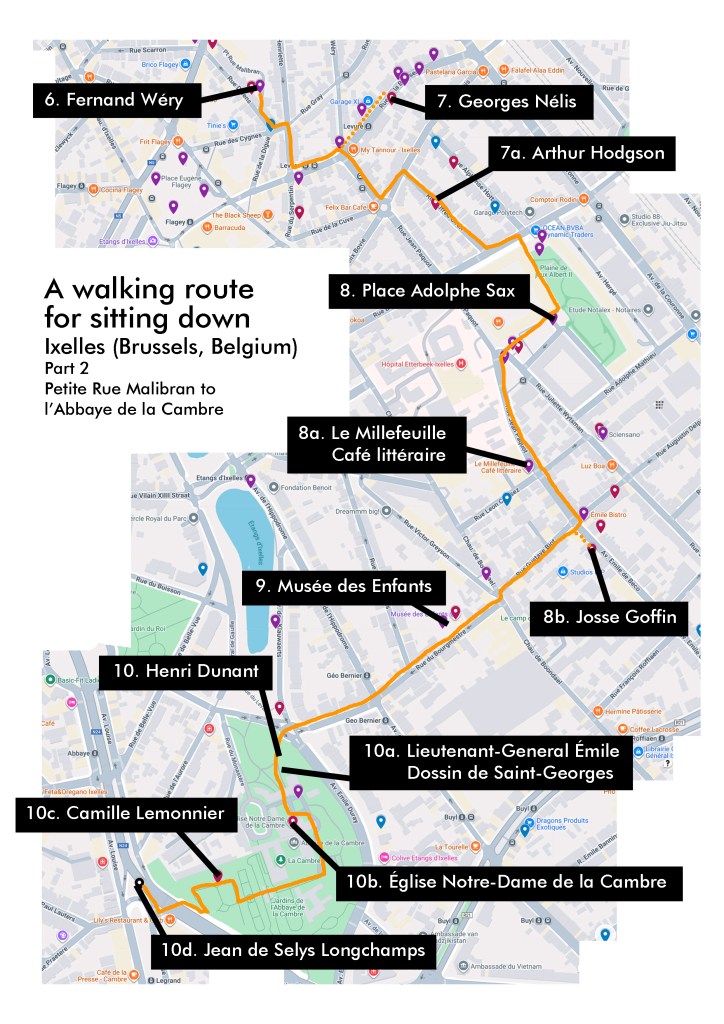
Now walk down Rue Gray, Rue du Serpentin, and take a left turn up Rue de la Brasserie. On the corner of Rue de la Brasserie and Rue de la Levure you’ll find a circular bench around a tree. There are also a number of restaurants and cafes nearby.
- Up Up and Away: Rue de la Brasserie
Rue de la Levure 29, 1050 Ixelles, Belgium
Seating: 24 hour circular bench on Rue de la Brasserie.
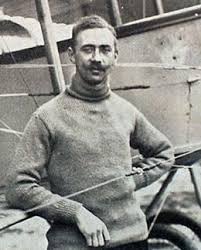
As you look up Rue de la Brasserie you’ll see a number of benches on the rising street ahead. These head up to the former home of Georges Nélis (Rue de la Brasserie 56), the founder of civil aviation in Belgium. In 1910 Nélis was the first Belgian military aviator to receive a pilot’s license from the Fédération Aéronautique Internationale (FAI). After commanding aircraft squadrons in WW1 he would later become the first director of Belgium’s national airline, SABENA, in 1923.
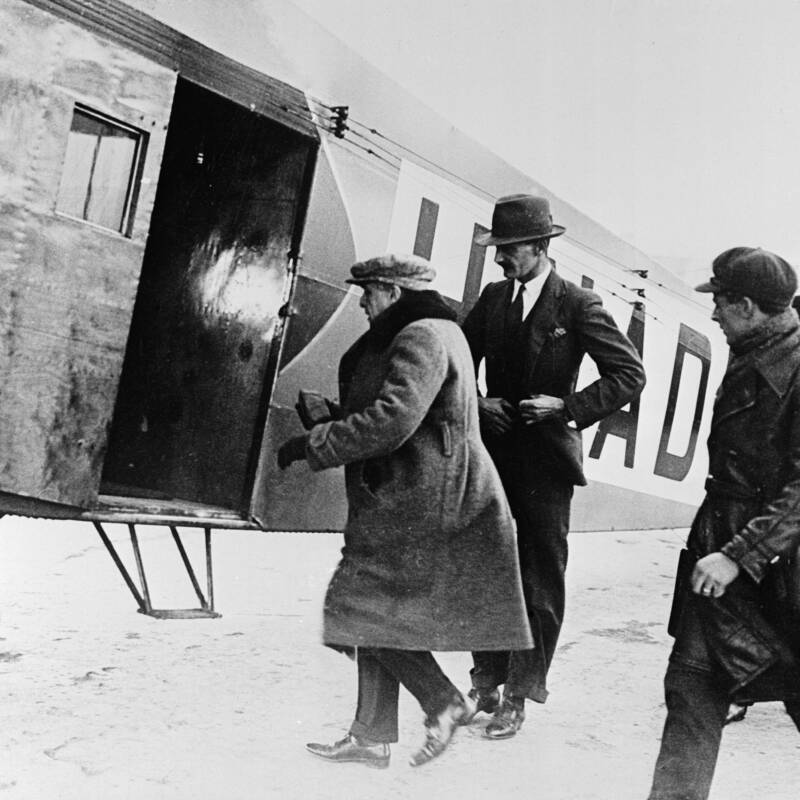
As you walk to your next destination the route takes you along Rue Alfred Giron, where Arthur Hodgson lived, an unremarkable man who was at the centre of the most famous (aviation) mystery of the 20th Century. Arthur was the private secretary to the Belgian financier and world’s richest man, Alfred Loewenstein, who died mysteriously in 1928 after reportedly falling from his private aircraft over the English Channel. Officially ruled an accident, rumours of suicide, murder, and financial scandal have fueled endless speculation and the strange case remains unsolved. Loewenstein’s three-engine Fokker had left the Croydon aerodrome at 6pm bound for Haren-Evere in Belgium. In the cabin with Loewenstein was Fred Baxter, his loyal valet, Arthur, and two stenographers Eileen Clarke and Paula Bidalon. The plane was five miles from the English coast, opposite Dunkirk, when Loewenstein suddenly left his seat to go to the toilet. He never returned.
Walk down, Rue de la Levure, Rue des Liégeois, Rue Alfred Giron and then left onto Avenue Auguste Rodin. On your right you’ll see the entrance to Place Adolphe Sax and Plaine de jeux Albert II.
- Sax Appeal: Place Adolphe Sax
Seating: Several 24 hour benches that run along Place Adolphe Sax and in Albert Verhaeren Square. During opening hours there are benches in the more picturesque environment of the park Plaine de jeux Albert II.
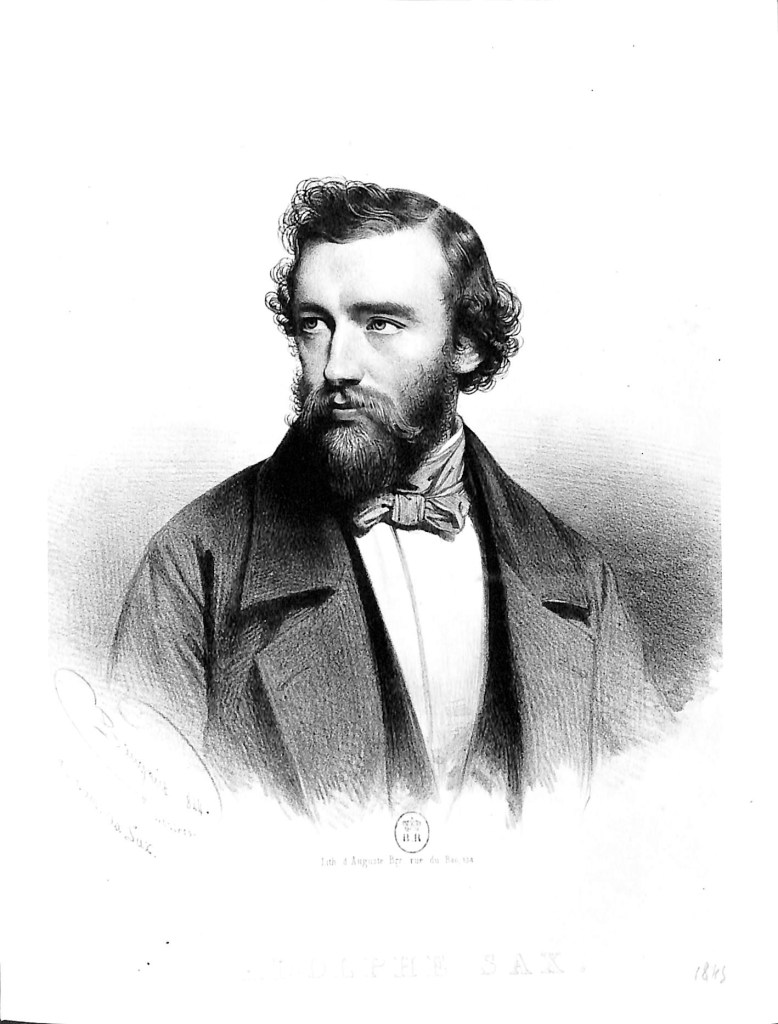
There are several benches in the delightful Plaine de jeux Albert II, and some more further along Place Adolphe Sax and into Albert Verhaeren Square. Take your pick, sit down and appreciate the musical gift that Belgium gave to the world, the saxophone. Antoine-Joseph “Adolphe” Sax, who this thoroughfare is named after, was born in Dinant, and later studied at the Conservatoire royal de Bruxelles. He invented many instruments, the saxotromba, saxhorn, and saxtuba, and redesigned the bass clarinet, but he will be best remembered for the saxophone, which he introduced to the world in 1846.
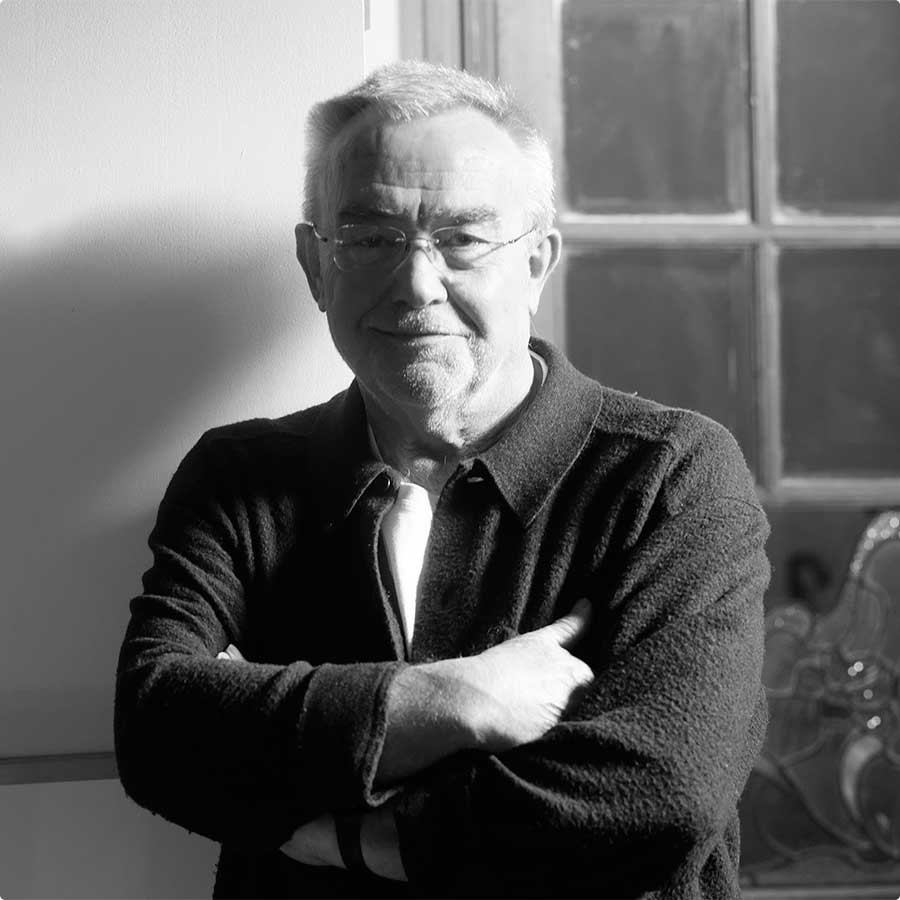
As you set off down Rue Jean Paquot keep an eye out for the literary cafe Le Millefeuille on your right. The road soon merges into Avenue Emile de Beco. At No.47 you’ll find the Josse Goffin Foundation, situated in the studio of the late Belgian Illustrator, artist and graphic novelist. Goffin’s wonderful art combines dreamlike mythology, playful changes in scale with surreal juxtapositions. In 1992, he received the Grand Graphic Prize at the Bologna Children’s Book Fair for his book Oh!. And that’s where we’re headed next, for a child’s eye view of the world.
Walk down Rue Gustave Biot. You’re headed for the Parc Jadot and the Musée des Enfants, which are located at No.15 Rue du Bourgmestre. If this is closed then there’s a place to sit in a small triangular park where the Chaussée de Boondael, Rue Victor Greyson and Rue Gustave Bio meet.
- Child’s Play: Musée des Enfants
Rue du Bourgmestre 15, 1050 Ixelles, Belgium
Seating: Large circular bench at the Musée des Enfants during opening hours, or a 24 hour bench where Chaussée de Boondael and Rue Victor Greyson meet.
The Musée des Enfants specialises in interactive exhibitions and workshops for children. It’s a popular space where children explore science, art, and daily life through playful learning experiences.
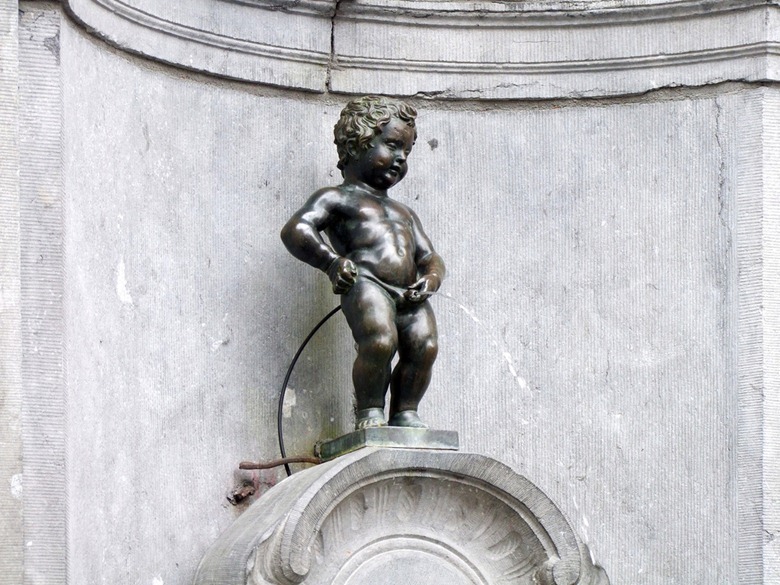
The most famous “child” in Brussels is perhaps the Manneken Pis. This small urinating bronze statue is a popular symbol of the city, and considered one of Brussels’ oldest citizens, representing its rebellious and mischievous spirit. Created by Jérôme Duquesnoy in 1619, the statue is a popular tourist attraction surrounded by many legends, and is known for being dressed in various costumes for special occasions. Visit it at Rue de l’Etuve, just a short walk from the Grand-Place.
We’re going to keep the statue theme going for the final leg of our walk. There will be plenty of places to sit down around the Église Notre-Dame de la Cambre and Jardins de l’Abbaye de la Cambre. Walk down the Rue du Bourgmestre and Avenue Géo Bernier, you’ll reach the Square de la Croix-Rouge roundabout, named in honour of the Belgian Red Cross.
- Statues and Sacraments: Église Notre-Dame de la Cambre
1000 Bruxelles, Belgium
Seating: Several 24 hour benches in the municipal park near the Square de la Croix-Rouge, but benches and seating in the more relaxed Jardins de l’Abbaye de la Cambre.
There are many places to sit down in the beautiful gardens of the Église Notre-Dame de la Cambre. My favourite place is in the South East corner of the gardens, where you’ll find a deep set rectangular pond (the source of the Maelbeek stream), with plenty of benches, a perfect place for watching the birds that inhabit the surrounding trees, flowerbeds, and hedges.
The Notre-Dame de la Cambre Church started life as part of the La Cambre Abbey, a former monastery of noble Cistercian nuns, founded in 1201. On the south side of the gardens you’ll find the La Cambre Visual Arts, one of the main art and design schools in Belgium. Walk toward the West and you’ll wander through the formal French style garden with its monumental staircase and five successive terraces. The site, including the garden and church, is open to the public. The church, now the parish church, is also open to visitors.
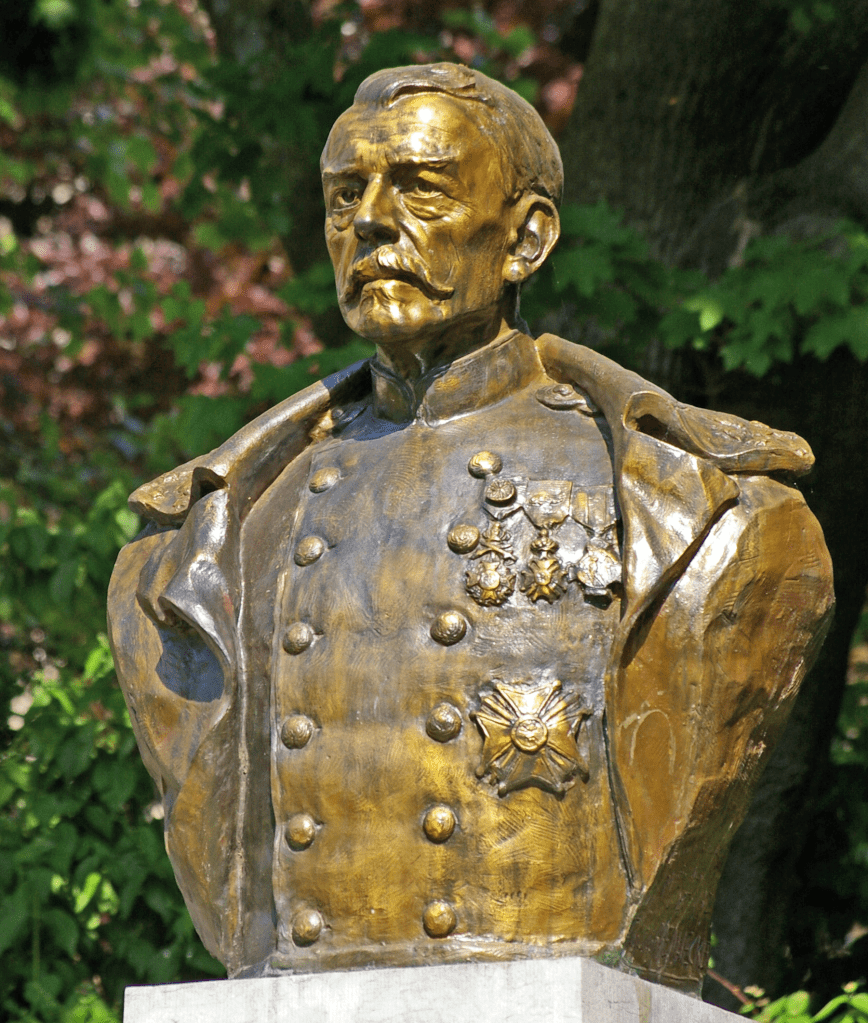
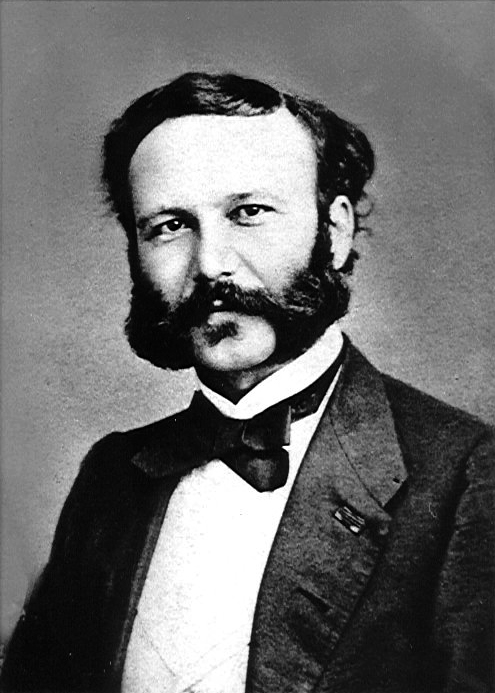
You’ll find various statues and tributes to famous people dotted throughout the site. Starting in the corner by the Square de la Croix-Rouge you’ll bump into Henri Dunant (1828-1910), the Swiss humanitarian, and co-founder of the Red Cross. Nearby there is a grand monument to Lieutenant-General Émile Dossin de Saint-Georges, who played a notable part during the retreat from Antwerp and in the Battle of the Yser in WW1. Dossin de Saint-Georges died in Ixelles in 1936, aged 81. There are also plaques dedicated to the painter Louis Clesse (1889-1961), poet Valère Gille (1867-1950), and artist Henri Logelain (1889-1968).
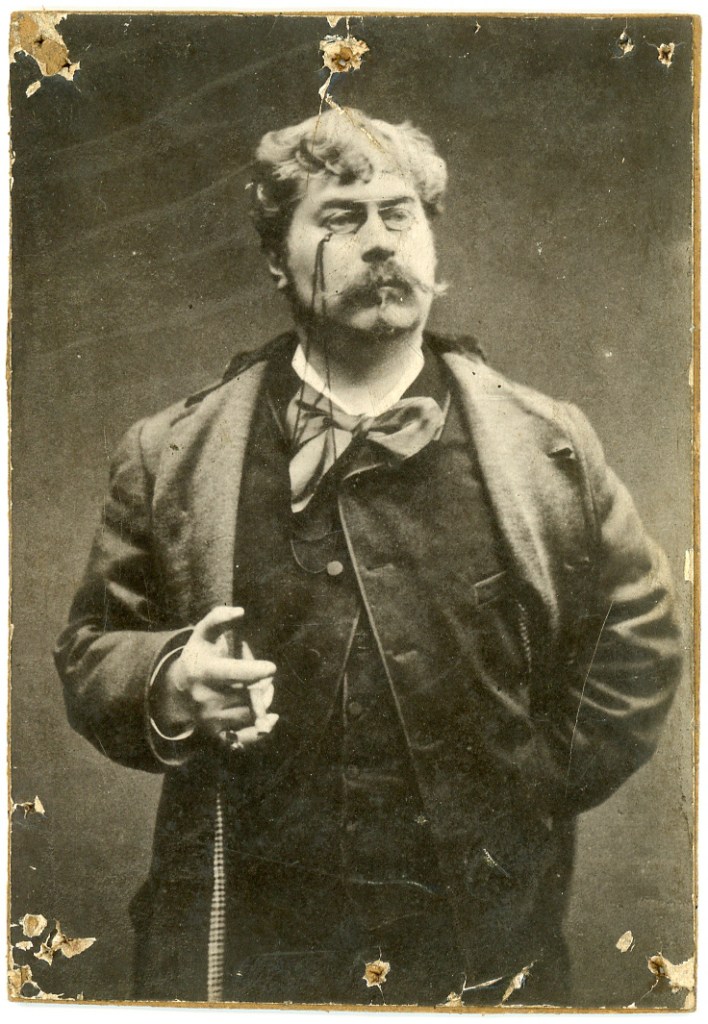
End your walk and rest your aching feet one last time on the monument to writer Camille Lemonnier, which you’ll find on the west side of the terraced gardens of the Abbey of La Cambre. Born in Ixelles, Camille Lemonnier (1844–1913) was a writer, poet and journalist, who was considered a pioneer of literary naturalism in Belgium.
His prolific output included novels, stories, and essays, earning him the nickname “the Belgian Zola.”
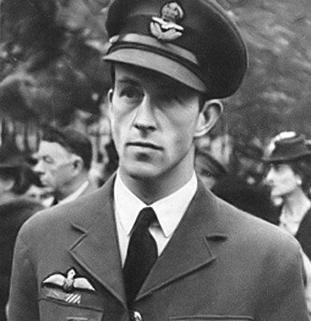
If you can’t enter the Jardins de l’Abbaye de la Cambre for some reason then finish your walk at the glittering gold statue of Belgian fighter pilot Jean de Selys Longchamps. Located where Avenue Louise meets Avenue Emile De Mot.
End.
 Guide to Paris Show Business