
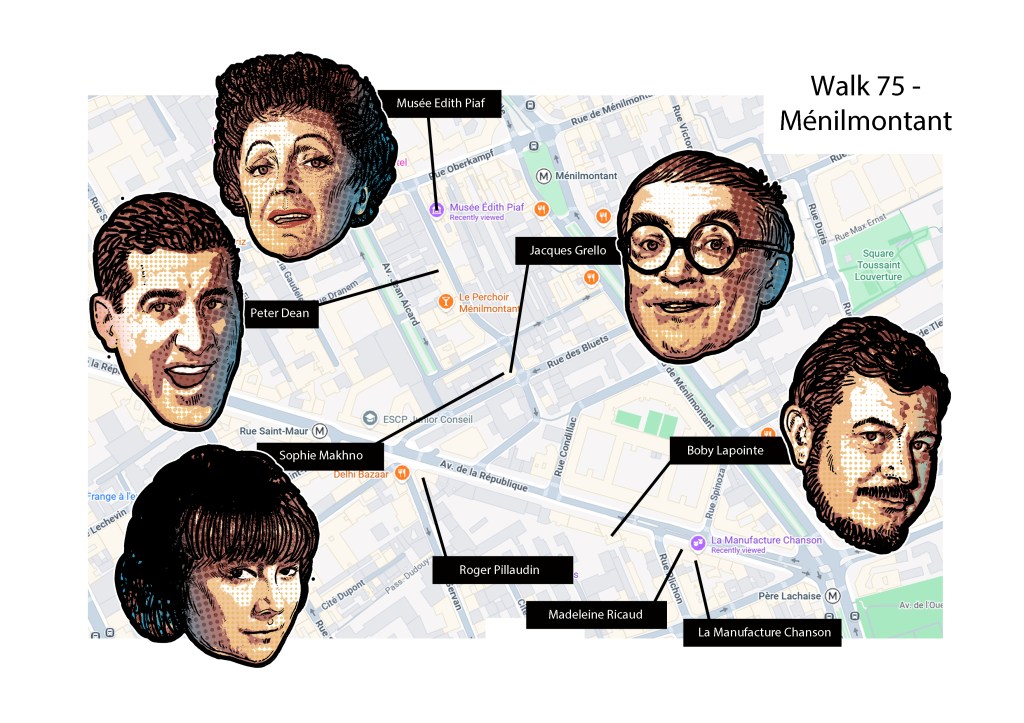
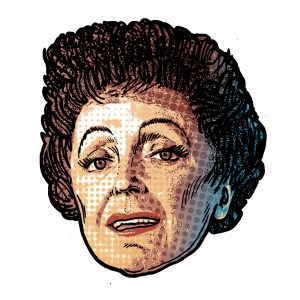
Musée Edith Piaf
5 Rue Camille Crespin du Gast, 75011 Paris, France
Édith Piaf’s heartbreakingly expressive voice, passionate performances and turbulent life made her an international star and national icon. Born into poverty, she was abandoned by her mother and briefly raised in a brothel. Starting as a street singer, her small stature earned her the nickname “the Little Sparrow”. The quintessential chanson singer, she intertwined the emotive themes of love, loss, and hardship through her autobiographical songs. She found success with signature songs like La Vie en rose and Non, je ne regrette rien, but her life was also plagued by personal tragedies, including the death of her lover, boxer Marcel Cerdan. Her health declined due to accidents and addiction, leading to her death at age 47. Edith Piaf lived there in 1933. For many years it was the site of the Musée Édith-Piaf. A private museum, managed by the association Les Amis d’Édith Piaf, and Bernard Marchois, her biographer.
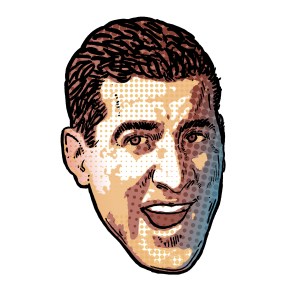
Peter Dean (CHEFS D’ORCHESTRES)
14 Rue Camille Crespin du Gast 9, 75011 Paris, France
Trumpeter Peter Dean (real name Pierre Dahan) was one of a number of bandleaders in the 1960s and 70s who reinterpreted popular tunes in a brassy accessible style. Although his kitsch offerings are largely forgotten now, he still made a lasting impression on the music industry. It was Dean’s invention, the Infernal Machine 90 (aka IM90) that revolutionized the possibilities of sound manipulation and experimentation for musicians in the years to come. Created in 1984, the IM90 is a legendary piece of equipment that enabled sound designers to employ a whole library of sound effects when working in film, television, and video games. Its sound lives on in the music of Prince, Brian Eno, Frank Zappa, and Pink Floyd, to name a few.
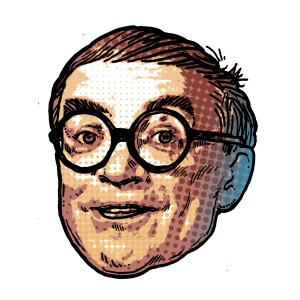
Jacques Grello (CHANSONNIERS)
17 Rue des Bluets, 75011 Paris, France
Like many of the chansonniers who titillated Parisian audiences throughout the postwar years, Jacques Grello was a man of multiple talents. He was the creator and host of the satirical current affairs television show La Boîte à sel and appeared regularly on the long running radio programme Le Grenier de Montmartre. As an actor he was comfortable on the Parisian stage as well as on film and TV. During the 1960s he appeared in the TV show L’histoire pittoresque, a programme featuring re-enactments of French history, combining historical reconstructions alongside the narration of the historian, Jacques Grello. He was a brilliant song-writer, presenting many of his own compositions at nightspots like the Caveau de la République and Les deux Anes. A man after my own heart, he was also a whimsical artist and caricaturist.
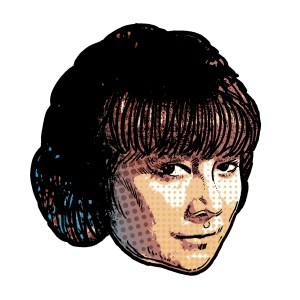
Sophie Makhno (CHANTEURS ET CHANTEUSES)
17 Rue des Bluets, 75011 Paris, France
Sophie Makhno was a singer-songwriter, author, and music-executive. In 1956 she began her career under the pseudonym Françoise Marin, performing songs by Pierre Perret at the cabaret La Colombe. From 1963-66 she served as secretary to the legendary singer Barbara, writing songs for her using her real name Françoise Lo. She became artistic director at CBS Disques in 1966, contributing lyrics and guiding artists in what was then, a male-dominated industry. Makhno wrote for some of the icons of the French music scene, including Patachou, Barbara, Charles Dumont and Gilles Vigneault. Her output included over 300 songs and recordings for adults and children. She later worked as a journalist for the marketing and corporate communications world but returned to performing in the early 2000s.
Roger Pillaudin (PRODUCTEURS ET PRESENTATEURS DE L’O.R.T.F.)
92 Av. de la République, 75011 Paris, France
Writer Roger Pillaudin collaborated with the composer and conductor Maurice Jarre for many years. In 1955 they won the Prix Radiophonique Italia for their radio production Ruisselle, a poem by Pillaudin with music by Jarre. Later in 1961 their musical comedy Loin de Rueil premiered at the Théâtre National Populaire/Palais de Chaillot in Paris. Pillaudin would go it alone in the 1970s, writing Il faut rêver dit Lénine for the Festival d’Avignon, a musical theatre piece with jazz and improvised music from Hungary and beyond. He was a producer at the ORTF (Office de radiodiffusion-télévision française) on the programme Dialogues de France-Culture, and in 1959 he followed Jean Cocteau during the filming of his last feature film, Le Testament d’Orphée, producing a series of radio broadcasts for RTF the following year.
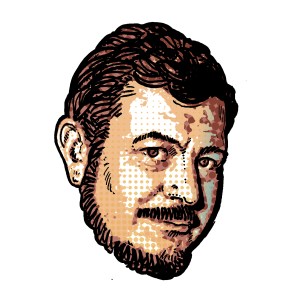
Boby Lapointe (CHANTEURS ET CHANTEUSES)
110 Av. de la République, 75011 Paris, France
Boby Lapointe was a French singer-songwriter celebrated for his rapid-fire wordplay, puns, spoonerisms and playful lyrics. He studied engineering and even opened a baby clothes shop in Paris before turning to music and comedy. His breakthrough came in 1954 when the actor Bourvil sang one of his songs in the film Poisson d’avril. In the 1960s he collaborated with his friend Georges Brassens and appeared in François Truffaut’s film Tirez sur le pianiste. Though not a mainstream star, Lapointe became a cult favourite for his clever linguistic inventions, and his songs continue to influence French comedic song writing today. A talented mathematician, in 1968 he invented the bibi-binary system, a numbering system that foreshadowed a path that the evolution of computing would follow.
Madeleine Ricaud (PRODUCTEURS ET PRESENTATEURS DE L’O.R.T.F.)
122 Av. de la République, 75011 Paris, France
Madeleine Ricaud started her career as an actress, then a producer, presenter and writer. She is best remembered for the many shows she was involved in for Radio France and France Culture. She tackled such varied projects as adapting Henry Fielding’s The History of Tom Jones, a Foundling for the radio; producing and writing a series on spies and espionage (Les espions et l’histoire); and creating several travel shows too.
La Manufacture Chanson
124 Av. de la République, 75011 Paris, France
La Manufacture Chanson is a space dedicated to song, a place for artists to meet, practice, cultivate their creativity, and share their passion and knowledge. Made up of a cooperative society of artists and songwriters, it provides daily training, support, professional development and cultural activities. For lovers of chanson and song there are regular concerts to attend, including Jeudi Chanson (free entry), an open mic night that runs from October to June (excluding school holidays). Its aim is to discover new artists and to showcase the work of trainees from La Manufacture Chanson.
 Guide to Paris Show Business