
Denise Alberti (PRODUCTEURS ET PRESENTATEURS DE L’O.R.T.F.)
30 Rue du Ranelagh, 75016 Paris, France
Denise Alberti was a radio announcer and presenter on ORTF (Office de radiodiffusion-télévision française) and its predecessor Paris Inter. She was a pioneer in a male dominated radio scene, where women often struggled to get their voices heard. It was Alberti that listeners often heard, without knowing the name behind the voice. In the 1940s she worked on the Programme Parisien show Les musiciens peints par eux-mêmes but she will be best known for presenting Route de nuit, the late night radio broadcast for motorists, truckers and bakers. In the 1960s and 70s she worked with Françoise Favier on Elle et lui and Le texte et la marge, both on the national radio station France Culture.
Marcel Camus (REALISATEURS DE TELEVISION / REALISATEURS DE CINEMA)
71 Rue Raynouard, 75016 Paris, France
Director Marcel Camus is best known for his 1959 film Orfeu Negro (Black Orpheus), which won the Palme d’Or at the Cannes Film Festival and the Oscar for Best Foreign Language Film in 1960. He started his film career as an assistant or technical advisor to Luis Buñuel, Alexandre Astruc, André Barsacq, Daniel Gélin and Jacques Becker. He made his first feature film in 1957, adapting Jean Hougron ‘s novel Mort en Fraud, but it would be his second, Orfeu Negro, which made him famous throughout the world. He married two of the stars of the film, first Marpessa Dawn and then Lourdes de Oliveira. His later films never recaptured the spirit and success of Orfeu Negro, although his World War II comedy, Le Mur de l’Atlantique, starring Bourvil in his last film, was well received. He directed a few TV series during 1970s and 1980s, including multiple episodes of La porteuse de pain, Les faucheurs de marguerites, and Ce diable d’homme.
Meg Lemonnier (COMÉDIENNES)
78 Rue Raynouard, 75016 Paris, France
British actress Meg Lemonnier was a leading lady of French cinema in the interwar period. She appeared in over 30 films during a career which started on the stage of the Théâtre de la Madeleine in 1928 (Broadway by Philip Dunning and George Abbott). She rapidly moved into the film world and the majority of her roles were in the 1930s. She was notably the regular partner of Henry Garat, whom she accompanied in the successful Il est charmant by Louis Mercanton and Karl Anton’s Un soir de réveillon. In 1933, she acted alongside Julien Carette, taking the lead role in the French version of the German film Viktor und Viktoria (retitled Georges et Georgette), of which Blake Edwards would direct a successful remake almost half a century later. Her opportunities dwindled post war, although she did appear in the 1954/55 television series Sherlock Holmes (starring Ronald Howard). Although she was listed in all the Guide du Show Business directories through the 1960s her last meaningful appearance was on the stage of the Théâtre Gramont (Paris) in 1959.
Claude Chabrol (REALISATEURS DE CINEMA)
6 Rue des Marronniers, 75016 Paris, France
Claude Chabrol was one of the founding fathers of the New Wave/Nouvelle Vague, the term applied in the late 1950s to a widely diversified experimental movement in French films. He was a director best known for his masterful suspense thrillers, subversive female roles and stinging critiques of the bourgeoisie. His first work, Le Beau Serge, was released in 1958 and he made more than 80 films (almost a film a year until his death in 2010), his last film was Bellamy (2009), a murder mystery starring Gérard Depardieu. Chabrol began his career as a critic at Cahiers du Cinéma in the 1950s before becoming a key player on the French film scene. He was often called the “French Hitchcock”, and co-authored a biography of Hitchcock in 1957. His run of films between 1968 and 1978 (when he lived here) are often referred to as his golden era. He was France’s master of the mystery thriller.
Christiane Reygnault – COMEDIENNES
14 Rue des Marronniers, 75016 Paris, France
Actress Christiane Reygnault made her theatre debut in Jean Racine’s Alexandre le Grand in 1949. She would split her time between the French theatrical hubs of Lyon and Paris during the 1950s, working with both the TNP (Théâtre National Populaire) and Comédie-Française (Paris). It was a golden period for Reygnault, with appearances on the National radio channel, first in Pierre Corneille’s Horace (1952) and then Chaucer’s Canterbury Tales, where she rubbed shoulders with Jean Topart and Aimé Doniat.

Eva (Eva Killutat) – CHANTEURS ET CHANTEUSES
47 Rue des Vignes 16, 75016 Paris, France
German-born singer Eva (full name Eva Killutat) moved to Paris in 1962 to study. She performed in the cabarets of Saint-Germain-des-Prés for two years, releasing her first album and single on the Mercury (Fontana) label in 1964. At this time she befriended the singer Barbara, who would be a guiding influence in these early years. Over the next she released a series of successful albums, and sang all over Europe, Africa and Quebec where she became very popular. She would be drawn to French Canada, and moved there in the 1980s, recording her last albums and becoming an artist and painter.
Jacques Fonson (COMÉDIENS)
47 Rue des Vignes, 75016 Paris, France
Jacques Fonson was born into a family of theatrical Belgians. His grandfather was Frantz Fonson, the vaudeville writer, operetta librettist, actor, and theatre director who had settled in Paris during the First World War. Jacques’ mother was the actress Davia, and his father, Lucien Fonson, was the director of the Théâtre royal des Galeries in Brussels from 1924 to 1972. Jacques would follow the family tradition, treading the boards for the first time in Henry de Montherlant’s Fils de personne in Biarritz. It would be in his grandfather’s famous comedy Le Mariage de Mademoiselle Beulemans that he first came to the public’s attention. He was destined to be a character actor rather than play the lead roles in the years to come. In the 1950s you could have seen him at the Comédie-Caumartin (Paris) and by the mid 1960s he was a member of the troupe at the Théâtre Le Kaléidoscope in Paris), appearing in two plays by Georges Pillement, La Pêche and La Famille. He played just a handful of roles on TV, including a minor part in an episode of Les enquêtes du commissaire Maigret.
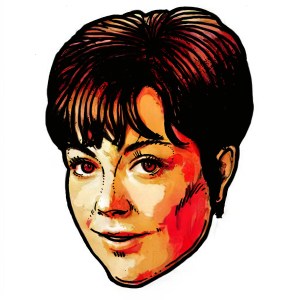
Annie Fratellini (CHANTEURS ET CHANTEUSES)
39 Rue des Vignes, 75016 Paris, France
The singer, musician, actress and clown Annie Fratellini came from the famous Fratellini family of circus artists. She began her circus career in 1948 at the Medrano circus, the edge of Montmartre. In the mid 1950s she had already launched a solo singing career, releasing her first single in 1955 and performing at Olympia in 1956. A popular performer she released over 30 singles between the mid 1950s and 60s. She balanced an acting career alongside her singing before falling in love with circus once again. This in part was because of her marriage in 1969 to Pierre Étaix, the filmmaker and clown. She first married the musician Philippe Brun, then the filmmaker Pierre Granier-Deferre, with whom she lived here, and had a daughter, Valérie.

Pierre Granier-Deferre (REALISATEURS DE CINEMA)
39 Rue des Vignes 16, 75016 Paris, France
Director Pierre Granier-Deferre made his first major film, Le Petit Garçon de l’ascenseur, in 1961. It was the time of the New Wave (Nouvelle Vague) in France, but unlike his neighbour Claude Chabrol, Granier-Deferre chose a more traditional route throughout his 40 year career. He started as an assistant director in the 1950s, working with another director who lived just a few doors away, Marcel Camus. He would go on to work with prestigious actors such as Simone Signoret, Lino Ventura, Jean Gabin, Alain Delon and Romy Schneider. In the early 1970s, he directed Jean Gabin twice, first in the thriller La Horse and then in the psychological drama Le Chat, Granier-Deferre’s first adaptation of a novel by Georges Simenon and in which Gabin played opposite Simone Signoret. These two films definitively launched his career. In 1995, he shot his last feature film for the cinema, Le Petit Garçon . Subsequently, he would devote himself to directing films for television, including several for the Maigret series, with Bruno Cremer. From 1967 to 1974, he was married to British actress Susan Hampshire.
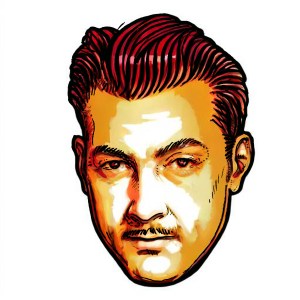
Michel Serrault (COMÉDIENS)
3 Rue Alfred Bruneau, 75016 Paris, France
Michel Serrault is the only actor to have won the César for best actor three times; in 1979 for La Cage aux folles; in 1982 for Garde à vue and in 1996 for Nelly and Monsieur Arnaud. One of the most popular actors of his generation, he appeared in over 150 feature films, taking on an array of eclectic and original roles. From the comedy of Vaudeville (La Cage aux folles) to the black humour of Buffet froid, to even darker roles from the 1980s onwards ( Malevil, Mortelle Randonnée, etc). Serrault’s original path in life was to be a servant to the Chritian faith, but after two years at a seminary he decided to become an actor. In the 1950s and 1960, he teamed up Jean Poiret, performing in the cabarets of Paris. In 1982, his neighbour Claude Chabrol hired him to play the lead role in Les Fantômes du chapelier , based on Georges Simenon’s detective novel. Chabrol wasn’t the only director who lived nearby and hired Serrault, he also appeared in Christian-Jaque’s La Française et l’Amour (1960), and Alain Jessua’s En toute innocence (1987).
Théâtre du Ranelagh
5 Rue des Vignes, 75016 Paris, France
The Théâtre du Ranelagh was built in 1894, it was a private music room until it became a cinema in 1931, before being converted into a theatre in 1985. From 1957 to the mid-1970s, under the direction of the surrealist painter Henri Ginet, Le Ranelagh was frequented by personalities such as Gérard Philipe, Marcel Carné, Arletty, Martine Carol and Vladimir Cosma.
 Guide to Paris Show Business