
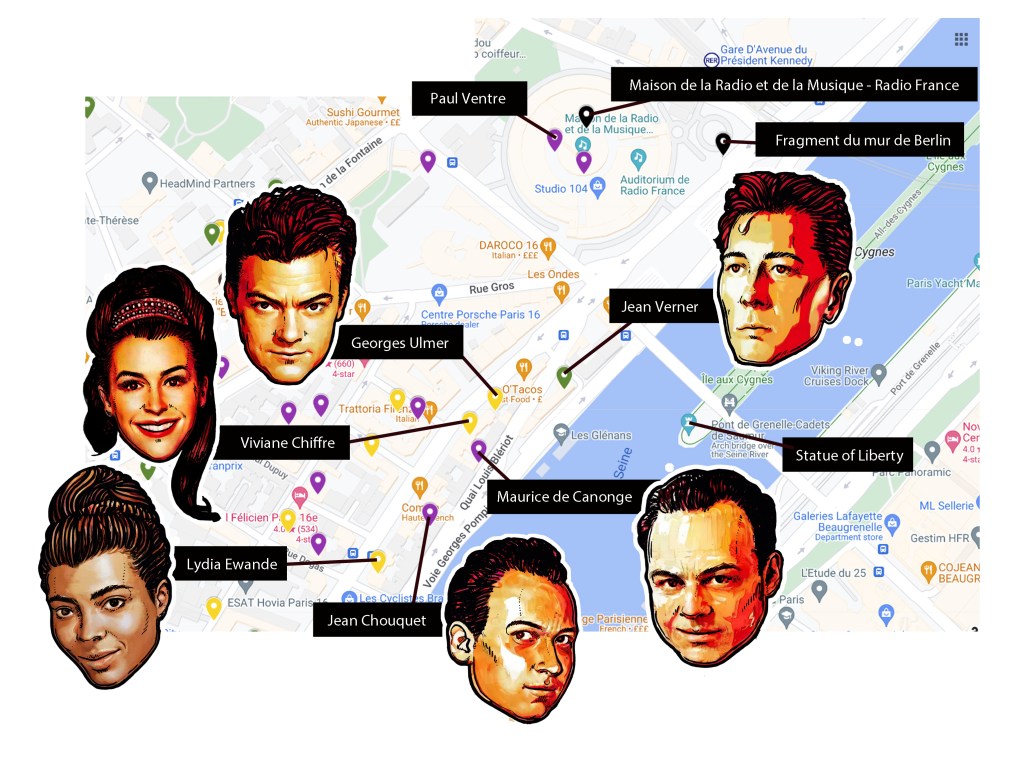
Fragment du mur de Berlin à la maison de Radio
108 Av. du Président Kennedy, 75016 Paris, France
A piece of the Berlin Wall is installed near the main entrance of the Maison de la Radio. It was given to Radio France by the President of Deutschlandradio, Willi Steul. As well as this section in the 16th arrondissement there are also two more dotted around Paris. In the 15th arrondissement, placed on the Esplanade du 9 Novembre 1989 (Porte de Versailles – Parc des Expositions) is a slab which was formerly located on Potsdamer Platz, in the Berlin Mitte district. It was offered to the city of Paris for the 20th anniversary of the fall of the wall. The third piece is hidden at the end of exit G of La Défense station. Over 3 metres long, it was bought at auction by the City of Courbevoie and installed here in 1996. It features a colourful fresco, covered in tags, by the artist Kiddy Citny.
Maison de la Radio et de la Musique – Radio France
116 Av. du Président Kennedy, 75016 Paris, France
Maison de la Radio et de la Musique, nicknamed “maison ronde” is the headquarters of Radio France. Built in the shape of huge ring 500 metres in circumference, with a central utility tower, the building houses the administrative offices, broadcasting studios, and performance spaces for all of Radio France’s national stations and its four permanent ensembles—Orchestre philharmonique de Radio France, Orchestre national de France, Chœur de Radio France and Maîtrise de Radio France. The building was designed by Henry Bernard and completed in 1963. Jean-Luc Godard’s 1965 dystopian science fiction film Alphaville was partially shot at Maison de la Radio.
Paul Ventre, Maison de la Radio (REALISATEURS DE RADIO)
116 Av. du Président Kennedy, 75016 Paris, France
On-air director Paul Ventre produced radio dramas for Radio-Alger. Featuring actors from the in-house troupe and a few Parisian performers they transmitted two dramas per week between 1945 and 1960. It was a golden time for drama on Radio-Alger, with the troupe enjoying real prestige with the public. During his time he directed Huguette Haimar, Clément Bairam, Laure Santy and Jacques Bedos in La Dévoilée (1956). During the 1960s he directed a major series on the Resistance, commemorating the 20th anniversary of the Liberation.
Georges Ulmer (CHANTEURS ET CHANTEUSES)
15 Av. de Versailles, 75016 Paris, France
Georges Ulmer was a Danish singer-songwriter and actor whose career flourished in France. He moved at an early age from Denmark to Spain, where he began working acting, writing and composing for the cinema, but it would be in France where he scored his first big hit. Despite being banned from radio broadcasts at the time his immortal Parisian tourist cliché, Pigalle, thrust him into the spotlight. He co-wrote the lyrics of the song in 1944 with Géo Koger and composed the music with Guy Luypaerts. Ulmer divided his career between America and Europe for a long time before settling permanently on the Côte d’Azur where he became the artistic director of the Municipal Casino of Cannes.
Viviane Chiffre (DANSEUSES)
21 Av. de Versailles, 75016 Paris, France
Viviane Chiffre was a professional dancer and singer, who was a member of Les Parisiennes, the French group of yéyé singers created by the composer Claude Bolling. In the 1960s she was a regular performer on TV, appearing in the film Deux Romains en Gaule (1966), a loose adaptation of the Asterix comic strip. In 1971 she joined Les Parisiennes, after Raymonde Bronstein/Beretta, left the group to pursue a solo career. In the 1980s she moved to Tahiti, and opened an art gallery in Papeete.
Lydia Ewande (CHANTEURS ET CHANTEUSES)
43bis Av. de Versailles, 75016 Paris, France
Cameroonian singer Lydia Ewande was one of the first African actresses to grace the French stage. She studied accounting and moved with her brothers to Paris at the age of 18. She debuted at the Théâtre de Lutèce (Paris) in Jean Genet’s Les Nègres in 1959, and would appear sporadically in stage productions until the 1990s. Here in Paris at the Théâtre de la Huchette, Théâtre de la Bastille, Théâtre La Bruyère and the Théâtre de l’Est Parisien. During the 1980s she was more often seen on the cinema screen rather than the stage. She played one of the main roles in Thomas Gilou ‘s film, Black Mic-Mac, alongside Jacques Villeret, a comedy about the lives of African immigrants in France. Her last performance was in 2007 in a TV film by Euzhan Palcy, Les Mariées de l’isle Bourbon , devoted to the colonisation of the island Bourbon (today La Réunion ).
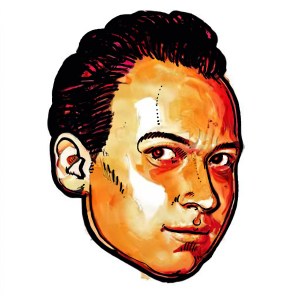
Jean Chouquet (REALISATEURS DE TELEVISION)
34 Quai Louis Blériot 16, 75016 Paris, France
A man of theatre, radio and television, Jean Chouquet was a producer, author and director of radio programs at RTF, Europe 1, Radio Luxembourg and Radio Monte Carlo from 1952 to 1976. He would go on to occupy a host of high profile roles within the Radio world. He nurtured the talents of a generation of actors, singers, musicians, and producers, including Micheline Dax, Jean-Marc Thibaut, and Philippe Noiret. After a long career at France Inter, Jean Chouquet put his talent, for many years, to the service of the local radio network of Radio France (France Bleu), where he directed the training of several hundred young professionals.
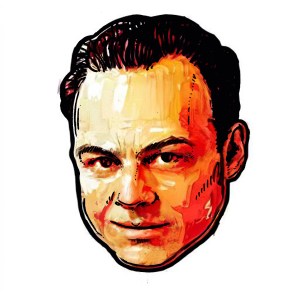
Maurice de Canonge – REALISATEURS DE CINEMA
18 Quai Louis Blériot, 75016 Paris, France
French director, actor and screenwriter Maurice de Canonge began his career on the stage of the Théâtre national de l’Odéon in 1911, first as a replacement for Georges Flateau in Roméo et Juliette, and then with appearances in Rivoli, and David Copperfield. He was soon to switch to the cinema, and was a regular on the French movie screens from 1914 until the 1950s (often appearing under the name Maurice Cannon in the USA). His portrayal of the dog-like lover of Louise Lagrange in Henry Bataille’s La femme nue (Bohemian Love) was noted by the critics and the French Kinema Exhibitors voted it their best picture of 1926/1927. He travelled back and forth between France and Hollywood during the 1920s, and his counsel was often sought on the sticky subject of why French films flopped on the other side of the Atlantic. Upon returning to home shores he became general manager of Gaumont, and launched into directing during the 1930s. His final directorial appointment would be two episodes of the excellent Le train bleu s’arrête 13 fois (1966).
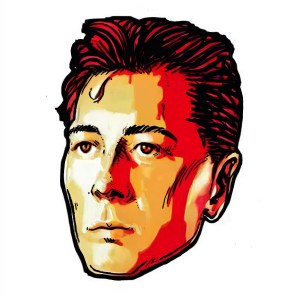
Jean Verner – COMEDIENS
15 Quai Louis Blériot, 75016 Paris, France
Jean Verner was a German actor who was also known as Hans Verner. He made his cinema debut in Atoll K (1951), Laurel and Hardy’s final screen appearance. He was often tasked with playing the role of German Officers in the many films which followed WW2. British audiences will know him best as Gustav Schiller in the 1966 film Judith. Verner plays the ex-husband of Sophia Loren, who denounced her to the Nazis as Jewish. Also that same year he appeared in the ITV drama Court Martial (All is a Dream to Me episode) alongside Gwen Watford. Regular readers of this website will be pleased to note he appeared in an episode of the legendary cop series Les cinq dernières minutes, a badge of honour for Parisian character actors.
Statue of Liberty
All. des Cygnes, 75015 Paris, France
This quarter-scale statue on the Île aux Cygnes was one of the working models used during construction of the actual Statue of Liberty in New York Harbor. It was given to France in 1889 by U.S. citizens living in Paris to celebrate the French Revolution. Originally, the statue was turned towards the east in order to face the Eiffel Tower. In 1937 it was turned towards the west so that it would be facing the original statue in New York. It is one of three replicas in Paris.
 Guide to Paris Show Business