
Maurice Gueritte (poète)
3 BIS Rue de la Réunion, 75020 Paris, France
The internment of poet and playwright Maurice Gueritte in Stalag III-A, the German WW2 prisoner-of-war camp at Luckenwalde, had a lasting effect on this talented writer. The poems he wrote about his experience were published as Solitudes d’un Stalag. Post war, Gueritte was heralded as a hero of the resistance when his two act play, Vercin, was broadcast with immense success on the radio. After the station received more than 30,000 letters from listeners requesting its presentation on the Parisian stage, the play was performed at the Théâtre de la République, with Serge Nadaud in the lead role. The first performance was given in benefit of the National Union of the Blind of the Resistance. The play was also part of a wider movement to attract new audiences to the theatre, and Vercin was the first time the Théâtre de la République had charged a single ticket price of one hundred francs. It proved a popular choice with the general public although some of Paris’ theatre critics bemoaned this pandering to the common folk.
Marcel Travers (poète)
57 Rue d’Avron, 75020 Paris, France
Poet Marcel Travers mostly wrote under the pseudonym of Carlos d’Aguila, and sometimes used M. Leniçois or M. Le Niçois. Under his own name he published poetry and even penned a song or two, the most famous of which is Victoire… La Fille À Madelon, recorded by Fredo Gardoni & Son Ensemble. As Carlos d’Aguila he wrote humorous texts for magazines such as Cent Blagues, Franc Rire, Ridendo, and Les Loups. He wrote a number of books and plays that covered diverse subjects from Leonardo da Vinci to the Côte d’Azur. As Marcel Travers he even wrote and published in the Occitan language.
Pierre Nicolas (Contrebasse)
11 Rue Tolain, 75020 Paris, France
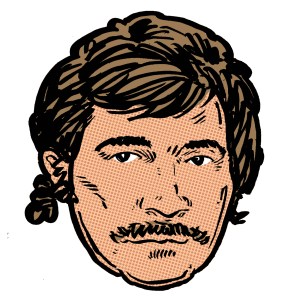
Pierre Nicolas is mostly famous for working with and accompanying Georges Brassens on double bass for nearly 30 years. Much in demand, he also played with other big name personalities of the era: Barbara, Jacques Brel, Charles Trenet, Guy Béart, Catherine Sauvage, and Patachou. It was at the cabaret managed by Patachou in Montmartre that Nicolas met Brassens in 1952, while playing in the orchestra of Léo Clarens. Together they are credited with around 200 releases, from Gastibelza “L’Homme A La Carabine” in 1954 to more recent Chanson Française compilations.
Georges Alloo (Piano)
62 Rue des Grands Champs, 75020 Paris, France
Pianist Georges Alloo studied at the Conservatoire and was awarded a second prize in 1950. He was unlucky not to achieve first prize according to all accounts the following year. He would go on to be a talented composer, bandleader and accompanied a select group of French stars of the 1950s and 60s. His defining musical relationship would be with the singer Anny Flore, a partnership that endured from the early 1950s until the end of the 1960s. Flore’s repertoire came out of the cabarets and music halls of Paris, with Alloo and his orchestra regularly supporting her on vinyl releases and at live performances. He was a sympathetic writer and conductor for female singers (Sandra, amongst others) and songwriters of the era, including collaborating with Marguerite Monnot on the brilliant film score for the 1960s film Les Canailles.
Maurice Denoux (PRODUCTEURS ET PRESENTATEURS DE L’O.R.T.F.)
46 Rue de Buzenval, 75020 Paris, France
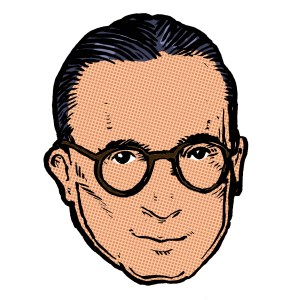
Songwriter and TV host Maurice Denoux composed more than 250 popular titles, many recorded by the big names of mid century Paris such as Lina Margy, Yvette Horner, and Tino Rossi. He produced and hosted the television shows Accordéon Parade, Mon bel accordéon and Sur un air d’accordéon, also the radio shows Le quart d’heure du mardi as well as Au Au Bal de l’accordéon. Amongst the accordion fraternity he is fondly remembered as the presenter of the La coupe de France de l’accordéon. The competition offered prizes equivalent to those distributed by the Paris Conservatory of Music and was intended to promote the accordion and reveal young talents. Denoux founded and managed his own publishing house Les Éditions Vox Mundi.

Marc Taynor (CHEFS D’ORCHESTRES)
46 Rue de Buzenval, 75020 Paris, France
There weren’t many Hillbilly orchestras operating in France during the 1950s and 60s, so the cowboy outfit fronted by Wild West bandleader Marc Taynor was one of the more memorable (if not incongruous) footnotes in Paris’ musical history. Every cowboy needs a sidekick and riding alongside Taylor was the pigtailed Basque singer Elise Rubio aka ‘La Bombe’, known by her stage name Alicia Ruby. Like his cowgirl partner, our cowboy Marc Taynor was not originally from the United States, in fact he was a proud Frenchman, Marcel Poincignon. As a writer and performer he rode many a popular novelty wave, cue such titles as Boing Boing (from the comedy film Comment réussir en amour, 1962) and Rugby Rock, no Frenchman could resist a combination of Rock n Roll and Rugby in the 1960s. Behind his many pseudonyms (Ben Azim, Ian Boutouk, Mister Sax) was a talented musician who played the violin, saxophone, clarinet, and was an equally accomplished songwriter. His musical journey started at the age of 6 after hearing Yehudi Menuhin play at the Salle Pleyel. As a teenager Poincignon worked as a musician on the Bordeaux-Panama and Le Havre-New York ocean liners. Back on dry land he led his own band at the cabarets La Coupole and Bacara, but as WW2 broke out he fought for the motherland. After a brave retreat at Dunkirk he moved from England to Africa, and ultimately returned home to work with trumpeter Philippe Brun. With the end of war and a love for all things American being on trend, he changed his name to Marc Taynor. He played with many of the top names in Paris at the time (Émile Prud’homme, Tony Murena, Gus Viseur and even the great Django Reinhardt) and his orchestra boasted the talents of even more Paris musicians: Marcel Azzola, Freddy Vander, Didi Duprat, Jack Irsa and André Salvador (Henri Salvador’s older brother).
Guy Deplus (Clarinette)
12 Rue des Grands Champs, 75020 Paris, France
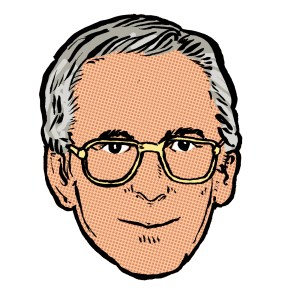
Guy Deplus studied clarinet at the Conservatoire de Paris, where he would later become a professor of clarinet, and received 1er prix in clarinet and chamber music. Together with Pierre Boulez, he co-founded the Concerts du Domaine Musical, the concert society which was active from 1954 to 1973. In 1963, he joined Ars Nova, the instrumental ensemble founded by the composer and conductor Marius Constant. In 1965, he was a founding member of the Octuor de Paris. In 1968, he played with the Orchester de l’ Opéra-Comique then was a super-soloist with the Orchester de l’Opéra until 1984.
Raphaël Beaufort (Piano)
34 Boulevard de Charonne, 75020 Paris, France
Pianist Raphaël Beaufort was a soloist with the Orchestre Du Théâtre National De L’Opéra De Paris. He played on a modest number of recordings but these were of high quality, including a 1971 release of Arthur Honegger’s Le Roi David, on which he played Celesta.
 Guide to Paris Show Business
One response to “Walk 54 – Buzenval”
[…] Find out where Marc Taynor lived on Walk 54 – Buzenval […]
LikeLike