
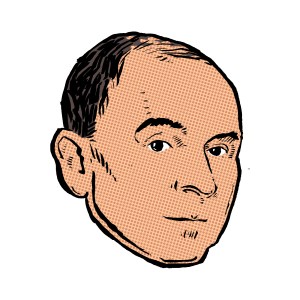
Jean Le Gac (artist)
67 Av. Gambetta, 75020 Paris, France
An internationally renowned artist, Jean Le Gac was a key player in the emergence of the Narrative Art movement. Since the 1960s, he has been reporting on the adventures of a painter, whose career could have been his, if great painting had not died with Picasso. His work presents itself as a police investigation whose pieces, those of a puzzle, are awaiting reconstitution. Mixing texts and photographs, drawings, pastels and other references, he tells stories in which his life intervenes as much as that of his hero. Fiction and reality merge to such an extent that his apartment and studio have become the Musée Jean Le Gac.
Théâtre de l’Est Parisien (Théâtre de la Colline)
17 Rue Malte Brun, 75020 Paris, France
The Théâtre de l’Est Parisien (TEP) was a French subsidised theatre located first at 17 rue Malte-Brun then at 159 avenue Gambetta, both in the 20th arrondissement of Paris. The building at rue Malte-Brun was originally a cinema and music hall called Le Zénith. The theatre received the status of national dramatic centre in March 1966. In 1983, the building was demolished to make way for the Théâtre de la Colline.
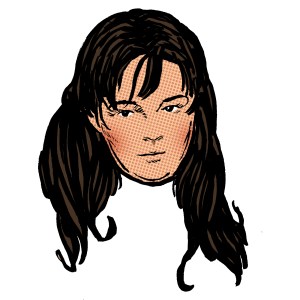
Arlette Tephany (COMEDIENNES)
13 Av. du Père Lachaise, 75020 Paris, France
Actress, singer, and director Arlette Tephany was the first woman to have directed a Centre Dramatique National (CDN) in France. Born in 1935 in Marseille, she completed a degree in English, then joined the Conservatoire national supérieur d’art dramatique. She became a member of the Guilde de Ménilmontant, the amateur theatre troupe founded by Guy Rétoré . Alongside Rétoré she helped establish the Théâtre de l’Est Parisien in 1963. After almost ten years at TEP, she experimented with cabaret, including the recording of unpublished songs by Boris Vian.
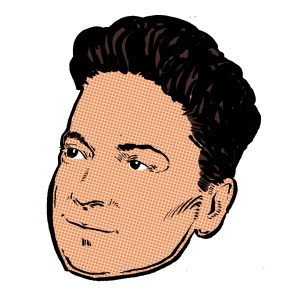
Pierre Devevey (CHEFS D’ORCHESTRES)
10 Av. du Père Lachaise, 75020 Paris, France
Pierre Devevey was a pianist, composer, and bandleader who should be much more famous than he is. The impressive list of his achievements include conducting the Orchestre National De L’Opéra De Paris, and the orchestra at ORTF, the state broadcaster. In the 1940s he was an accompanist for Alex Padou, and the surrealist poet Lise Deharme, who he performed with on TV with in 1948. The 1950s was equally varied for Devevey, he worked in a quintet (with two pianos) alongside the stylish pianist Dominique Jeanes. He was a musician who loved to travel, working with singers and musicians from Africa and the Americas in the 1950s. In his car he drove across France, taking part in a series of rallies organised by the Automobile Club d’outre-mer. In 1954 this included the Tarn Gorges Weekend, a 1,600 kilometre long race in two stages: Paris-La Bourboule and La Bourboule-Mende. Not only did he take part in the race but he also had to perform at the end! Devevey played both the harpsichord, organ, and led his own L’Ensemble D’Instruments Anciens. Due to his scrupulous research he was able to resurrect forgotten compositions and present them to the French public with concert performances and vinyl releases. Although he was active in the 1960s with his orchestra (playing with Moune De Rivel), he made a stronger impression with his writing. His compositions were recorded by André Bertin, Jacques Istria, the Trio Musette De Paris, Paul Bonneau, and Germaine Montero, but it was his work with the Chappell label that has left an enduring cult following for his library music.
Fernand Garbasi (Guitare)
3 Pl. Gambetta, 75020 Paris, France
Fernand Garbasi was a guitar and banjo player on more than 20 LPs and EPs from the 1950s to the 1990s. He played with some of France’s biggest names, including Henri Génès, Claude Bolling, Guy Béart, Jean-Roger Caussimon, Paul Mauriat and Georges Brassens. In 2006 he appeared with legendary accordionist Yvette Horner at the Cité de la Musique. Garbasi played a rare 6 string Banjo-Guitar, which can be heard in the film Borsalino.
Philippe Joulia (REALISATEURS DE TELEVISION)
8bis Rue Belgrand, 75020 Paris, France
Director Philippe Joulia started his showbiz career as a theatre actor in the troupe of René Barré. It would be a very short career at the end of the 1950s, and he would soon move behind the camera to direct his first short film in 1961. Its subject was the Chapelle Saint‑Blaise des Simples, a chapel decorated by Jean Cocteau. In 1968 Joulia directed all nine episodes of the TV series Six Chevaux Bleus, the story of a Chinese man who inherits six blue porcelain horses and discovers that one of them contains the combination to a safe filled with diamonds. He went on to direct several TV films with some of the brightest stars of the day, including Alfred Adam (La fuite, 1971), Andrex (L’argent par les fenêtres, 1972), and Nicole Maurey (Le feu sous la neige, 1973), as well as an episode of the TV series Les cinq dernières minutes in 1977.
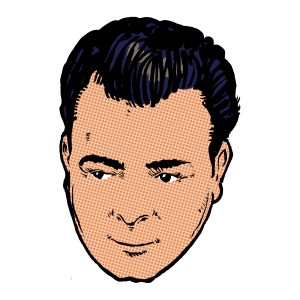
Alain Vanzo (ARTISTES LYRIQUES)
7 Rue du Cher, 75020 Paris, France
One of the most famous French opera singers Alain Vanzo started his musical journey by establishing his own small variety orchestra in Aix-les-Bains, before joining the gypsy orchestra Les Vinitzky in 1950. Performing in brasseries, balls, cabarets, his repertoire included music hall songs and operettas, but he also played the piano and the accordion. He was the understudy for Luis Mariano in the operetta Le Chanteur de Mexico in 1951. In 1954 he engaged the talents of Rolande Darcœur, who trained him in opera. He subsequently won first prize in the international tenor competition in Cannes, and entered the Paris Opera and the opéra-comique. In 1957 he established himself, alongside Maria Callas, in Donizetti’s Edgardo de Lucia di Lammermoor, which marked the beginning of a very successful international career. In 1965, he made his concert debut in New York, at Carnegie Hall, in Lucrèce Borgia by Donizetti (role of Gennaro) with Montserrat Caballé.
 Guide to Paris Show Business
One response to “Walk 47 – Gambetta”
[…] Find where Alain Vanzo lived on Walk 47 – Gambetta […]
LikeLike