
Thierry Merick (COMEDIENS)
4 Av. Taillade, 75020 Paris, France
The career of actor Thierry Merick unfolded almost completely under the radar. Only a couple of credits remain in his name, appearances in the TV film Le colchique et l’étoile, and also in two episodes of the TV series Noële aux quatre vents (1971). The latter was a soap opera directed by Henri Colpi, based on the eponymous novel by Dominique Saint-Alban. The series depicts the misadventures of Noële, a young romantic girl, who learns that her father is not who she thinks but a rich Greek shipowner.
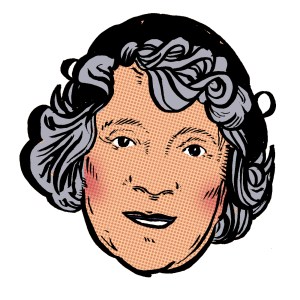
Hélène Seguin (poètess)
178 Rue de Belleville, 75020 Paris, France
Poet Hélène Seguin worked as a teacher, then as a secretary for an organisation supporting soldiers that were wounded in WW1. She was associated with the École nationale supérieure des beaux-arts de Paris, and later became honorary vice-president of the Société des Poètes Français. The French Academy awarded her the Prix d’Académie in 1944, then the Prix Amélie Mesureur de Wally in 1961, and she received the Grand Prix de Joseph Autran from the Société des Poètes Français in 1963. Known as La Bergère, she was active in the Groupe d’Action d’Art Les Loups, and it’s only female member.

Marcel Coestier (CHEFS D’ORCHESTRES)
37 Rue des Rigoles, 75020 Paris, France
Alto Saxophonist and clarinettist Marcel Coestier played with some of the hottest orchestras and musicians of the 1940s, perhaps the most famous musician being the gypsy guitarist Django Reinhardt in Alix Combelle’s band. Other orchestras of the 40s included those of Noel Chiboust, Armand Molinetti, and Charles Hary. He went on to be a bandleader in his own right, conducting the orchestra at the Lido and the Moulin Rouge. A writer of note, he composed the music for singers Fabia Gringor, Rina Ketty and Camillo Felgen. Together with Felgen he co-wrote Bonjour mes amis, the signature tune for Radio Luxembourg. In 1959 he helped open the music school L’école de musique intercommunale Claude Bolling, in Trouville-sur-Mer.
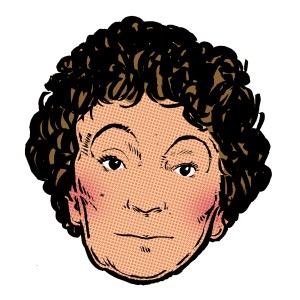
Jenny Bellay (COMEDIENNES)
330 Rue des Pyrénées, 75020 Paris, France
Actress Jenny Bellay broke onto the French cinema and theatre scene in the 1960s. She made her Parisian stage debut in 1962 in Jean Racine’s Britannicus at the Théâtre des Bouffes Parisiens. It would be a dual career that only seemed to improve as she got older. Her last film, the aptly titled Adieu Paris was released in 2021, a year after her death. Bellay appeared in nearly 30 theatre productions, but there was one director she worked with again and again, Robert Hossein. She worked under Hossein’s expert guidance in nearly every decade of her career, in the 1960s it was with the Théâtre Populaire de Reims, in the 1990s at the Théâtre Marigny (Paris) in Cyrano de Bergerac, in the 2000s in Dostoïevski’s Crime et châtiment, and finally in 2010 in Dominici. This was not the end of her stage career by a long way, her final performance was scheduled to be in Tchekhov’s Pièces en un acte, a production that was disrupted by COVID. She was the author of two plays, Du côté de chez Colette, that was performed across France, and À la belle saison, that played to audiences in the 20th arrondissement at the Théâtre de l’Est Parisien.
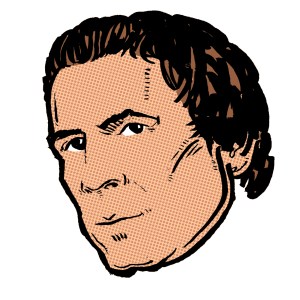
Jacques Mignot (COMEDIENS)
330 Rue des Pyrénées, 75020 Paris, France
Actor Jacques Mignot made his theatre debut in one of the most controversial plays of the 1950s. In 1951 he appeared in Henri Martin’s Drame à Toulon, the dramatisation of a French sailor’s protest against the brutality of the French military’s conduct in the Indochina war. The play was performed all over France, usually clandestinely, and in a hostile environment of Government opposition and police harassment. Jean-Paul Sartre referred to it as the only example of true théâtre populaire in existence at the time. In August 1953, and with help of the play’s impact, Henri Martin was released after serving forty months of his five year sentence. Jacques Mignot was a member of the Pavés de Paris troupe, who performed the play more than 300 times, mainly to working class audiences.
Later in the 1950s Mignot took to the stage alongside Les Compagnons de la Chanson in the operetta Minnie Moustache. In the 1960s he appeared in Parisian productions at the Théâtre Daunou and Théâtre de l’Œuvre. Toward the end of his theatre career he often worked under the directorship of Robert Hossein. He directed a handful of plays himself, including Henri Slovès’ Tu lèveras ton front at Studio des Champs-Élysées in 1964.

Georges Vaillant (ARTISTES LYRIQUES)
383 Rue des Pyrénées, 75020 Paris, France
Born in Algeria, Georges Vaillant was a French opera singer who performed all the major bass roles in the repertoire on the stage of the Opéra Garnier from 1952 to 1966. He had started studying as an artist at the National School of Fine Arts in Algiers but would soon turn to singing. After briefly working in mainland France before WW2 he returned to Algeria as the war started, where he sang in the operas of Algiers, Oran, and Constantine. After the war he worked again in Europe, eventually becoming one of the indispensable members of the Palais Garnier in the 1950s and 60s. He was well known for the beauty of his tone, his exemplary articulation, and his stage personality. He lived here in 1965. During the year he appeared 4 times at the Opéra-Comique, twice in Les Contes d’Hoffmann and The Barber of Seville. After retiring from the stage in 1972, he devoted himself to teaching.
Christian de Saint-Maurice (REALISATEURS DE TELEVISION)
22 Rue des Envierges, 75020 Paris, France
Christian de Saint-Maurice directed just one film for the cinema, the mysterious Suspense au deuxième bureau, in 1960. The Deuxième Bureau was France’s external military intelligence agency from 1871 to 1940, but was a term that was also widely used for the country’s intelligence service thereafter. More frequently de Saint-Maurice directed for ORTF, the state radio and television agency. He wasn’t a specialist, like some other directors, but covered a broad range of subjects, including Le château de Flamarens (1967), romantic poetry (1967), the churches of Toulouse (1968), and prehistoric art (1971).
El Clan Destino
18 Rue des Envierges, 75020 Paris, France
Filled with papier-mâché puppets, bits of Barbies, and the occasional skull, the storefront of El Clan Destino invites passersby to stop and stare for a while.
This place, located near the beautiful Parc de Belleville (the sunsets there are a great alternative to the busy ones at Montmartre), is the home of Diego Stirman, a self-proclaimed charlatan, magician, and marionette expert. The tiny theatre hosts puppet shows and street theatre.
https://www.familia-stirman.com/

Jacques Prez (Percussion)
20 Rue Jouye-Rouve, 75020 Paris, France
Percussionist Jacques Prez started his career playing accordion with his father Jules on Radio Lille. He would move from playing the accordion at balls and in cafés to working in major orchestras as a percussionist. In 1965 he was appointed professor of Percussion and Solfège at the Reims Conservatory and then moved to the Nancy Conservatory in 1973. At the same time, he was a timpanist at the Opéra national de Lorraine in Nancy, the city where he ended his career.
Roger Terrien (Guitare)
38 Rue de Belleville, 75020 Paris, France
Roger Terrien started his career alongside his accordionist brother Paul in the orchestras around Brittany. After WW2 he moved to Paris and became a guitarist to the stars of the day: Dario Moreno, Richard Anthony, Henri Salvador, Françoise Hardy, and Barbara. Although he was best known for playing the guitar he also played the violin, flute and saxophone. Terrien was an in-demand session musician who made recordings with Burt Baccarah, Georges Delerue, Claude Bolling, Stéphane Grapelli, Buck Clayton, and Jacques Loussier. He toured France with the orchestras of Jacques Hélian and Michel Legrand, and also travelled the world with the singer Dalida. After an international career of note he moved to Nantes and taught at his guitar school on the Quai de Versailles.
See an object relating to Belleville HERE
 Guide to Paris Show Business
One response to “Walk 44 – Belleville”
[…] See where Roger Terrien lives on Walk 44 – Belleville […]
LikeLike