
See an object relating to Rue Manin HERE.
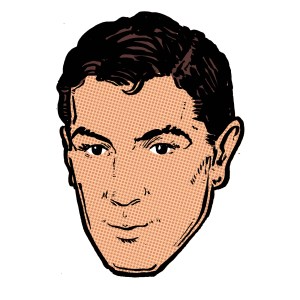
Maurice Vanderschueren (Vander) – (Piano)
12 Rue Manin, 75019 Paris, France
Maurice Vanderschueren (known as Maurice Vander) was a French jazz pianist who composed music for Claude Nougaro. He was a friend and arranger for the popular singer-songwriter for years. Vanderschueren’s father was an accordionist and young Maurice trained as a classical pianist before falling in love with jazz on the radio. At the beginning of the 1950s in the clubs of Paris he accompanied and often recorded with well-known musicians such as Django Reinhardt, Don Byas, Bobby Jaspar, Jimmy Raney, Stéphane Grappelli, Kenny Clarke and Biréli Lagrène. In 1962 he won the annual Django-Reinhardt Prize, and fronted several of his own recordings (Jazz at the Blue Note with Kenny Clarke and Pierre Michelot, 1961). He participated in Parisian recordings of Chet Baker and Stan Getz, and appeared on the radio with Abbey Lincoln and Max Roach (in 1967). Maurice Vanderschueren met Claude Nougaro in the early 1960s, he was his pianist, co-composer and arranger for four decades. Nougaro nicknamed him “the rooster” and paid tribute to him in his song Le coq et la pendule. He has worked on several film scores, notably orchestrating Francis Lai’s score for Un homme et une femme (1966).
Pierre Mignot (REALISATEURS DE TELEVISION)
10 Rue Manin, 75019 Paris, France
Not to be confused with the Canadian film director of the same name, Pierre Mignot was a French director and writer who made his film debut with the short documentary Haussmann Et La Transformation De Paris in 1951. He would go on to direct episodes for various TV series in the 1960s. These included an episode of Pour le cinéma, featuring Dennis Hopper and Peter Fonda as they presented Easy Rider at the Cannes Film Festival.
Les Haricots Rouges (CHANTEURS ET CHANTEUSES)
91 Rue Manin, 75019 Paris, France
This was the address of Jean-François Rabre, bassist and leader of the popular French Dixieland jazz group Les Haricots Rouges. Since forming the band in 1963 they have sold more than a million albums and continue to perform to this day. The members of the Les Haricots Rouges came from the same Rodin high school in Paris, and went on to become a cult group, combining their humorous and satirical lyrics with a New Orleans jazz repertoire. They achieved popularity in the late 1960s performing at l’Olympia in Paris, where they opened for the Beatles, Rolling Stones, Jacques Brel and many others. The highpoint of their career was in 1966 at the Eurovision Song Contest in Luxembourg. They performed two Dixieland songs in the intermission, including a memorable washboard solo.
Born in Toulouse in 1943, Jean-François Rabre was the driving force of the band. Apart from being the press secretary and general dogsbody for Les Haricots Rouges, his other passions were automobile mechanics and horse riding.
Roger Pradines (REALISATEURS DE TELEVISION)
81 Rue Manin 19, 75019 Paris, France
French director and documentary maker Roger Pradines began his broadcasting career at the radio-television department of the Eiffel Tower in 1944. By the 1950s he was directing variety and entertainment shows. In the 1960s he was the director of Le Palmarès des songs, one of France’s most popular and influential TV entertainment programmes. Broadcast every week from 1965 to 1968 on the first channel of French television, it was where French and international singers, new and established talent, sought the approval of the French public. Perhaps the most important performing guest was that of Jacques Brel, who in 1966 made his very last TV appearance on the show. Pradines continued directing into the 1970s and 80s, including a Christmas special with Henri Salvador in 1978, featuring the talents of Eddy Mitchell, Zanini, and Jean Le Poulain.
Michel Marny – COMEDIENS
11 Rue Meynadier, 75019 Paris, France
Michel Marny was an actor who appeared in the Swiss television series Spectacle d’un soir in 1968. A flourish of post millennium appearances for the director Jacques Otmezguine rejuvenated his film career, including playing a supporting role in the thriller Une employée modèle (2002) and the TV film La promeneuse d’oiseaux (2007).
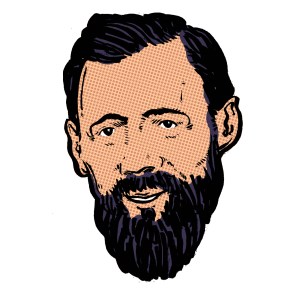
Arsène Martel (poète)
11 Rue Meynadier, 75019 Paris, France
A fascinating figure in the history of Paris, it is scarcely believable that the life of Arsène Martel hasn’t been immortalised in a book, rivalling the fame of Jules Maigret. He was a doctor of law, an ex-professor with a degree in higher studies from Sorbonne who would become one of the most beloved Police Commissioners in Paris. Martel was a boxing champion and a man of action but also a poet of sensitivity, wit and insight. His experiences in WW1 inspired him to write and publish a pamphlet of 50 poems, Dianes et Tocsins. Amongst literary circles he was known as Le Barde du Fumoir (The Bard of the Smoking Room). He was a hero in many of the communities that he protected as part of his job. In the 19th arrondissement he is remembered for a particularly brave episode in 1926, when 16 year old Etienne Jeanne took to the streets with a revolver. The youth was running rampant in the Place Armand-Carrel when Martel tried to apprehend him. Despite Jeanne trying to shoot Martel, the police commissioner was able to disarm the young bandit and march him down to the station. Legend has it, that he was the man who introduced Judo to France, and he personally employed the martial art of jiu-jitsu in his police work. In 1938 he was injured during a hunting trip with Baron de Rothschild, but he cheated death that day and lived for another 17 years. He is buried in the Cimetière du Père Lachaise.
Georges Megalos (Guitare)
1 Rue Meynadier, 75019 Paris, France
Born in 1922 to a Walloon mother and a Greek father, guitarist Georges Megalos would go on to play with some of the greatest names in French music. He first fell in love with Jazz in the carefree days that swept through Paris immediately after the war. After meeting jazz violinist Michel Warlop one evening in Pigalle, he was hired to play in his septet and toured the South of France. It was the start of a formidable career. After opening for Charles Trenet in the Salle du Capitole in Marseille, Georges Mégalos returned to Paris, where he continued recording and touring with the greats including Charles Aznavour, Johnny Hallyday, Jean Ferrat, Georges Brassens, Gilbert Bécaud, and Claude Bolling. He left Paris at the end of the 1970s after six years spent in the Bobino orchestra.
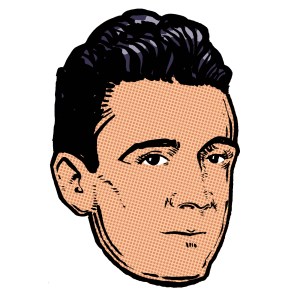
Carlo Ferrari (CHANTEURS ET CHANTEUSES)
27 Rue du Rhin, 75019 Paris, France
Corsican singer Carlo Ferrari was often compared to his fellow countryman Tino Rossi. Discovered by the Abbé Henri Esmenjaud dit Sixte, Ferrari was described as one of the most beautiful voices on French and foreign radio. He was a popular draw at theatres across France, particularly in Marseille, where he is famous for singing the anthem of Olympique de Marseille. In the 1960s he released a number of EPs on the Disques ROG label, and appeared at the Festival de la chanson Corse at l’Olympia.
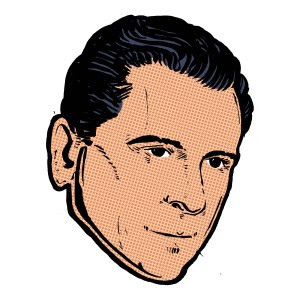
Claude Genty (ARTISTES LYRIQUES)
11 Av. de Laumière, 75019 Paris, France
Trained as a potter, Claude Genty embarked on a career as a singer after meeting a famous travelling impresario. He moved to Paris and would eventually join the troupe of the Opéra de Paris, who he stayed with until his retirement. His beautiful baritone voice represented all the major roles of the lyrical repertoire, performing alongside the greats, such as Mady Mesulé, Alain Vanzo, Robert Massard, Michel Sénéchal and even Luciano Pavarotti. In particular, on October 21st, 1963, he participated in the creation of Le Dernier Sauvage by Gian Carlo Menott.
Alain Bogréau (DANSEURS)
26 Rue Armand Carrel, 75019 Paris, France
Dancer and educator Alain Bogréau was a member of the Opéra de Paris from 1959 to 1994. The Paris Opera Ballet is the oldest national ballet company, and is still regarded as one of the four most prominent ballet companies in the world, together with the Bolshoi Ballet in Moscow, the Mariinsky Ballet in Saint Petersburg and the Royal Ballet in London. During the 1960s Bogréau appeared in Roland Petit’s balletic interpretation of Victor Hugo’s Notre-Dame de Paris. It was the first work Petit created for the Paris Opera Ballet and was a great success. By 1974 he had graduated to performing as a male soloist, first in Vladimir Bourmeister’s Swan Lake and subsequently in Alicia Alonso’s Sleeping Beauty.
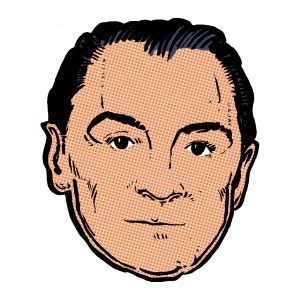
Roger Michael (poète)
61 Rue Manin, 75019 Paris, France
Noted for his poems on the tragedy of human life, his writing rallied against the injustices and cruelties of the world. He was not a poet who felt himself above the people he lived amongst, in fact it was these very people who inspired him, who walked the paths of the Parc des Buttes Chaumont opposite his home. His poems, published under the pseudonym Roger Michael, sang of the harshness and suffering of life, the nobility of daily work, the poverty of the populous neighbourhoods of the big city, and the existence of little people, with their humble and touching pleasures. Roger Michael started life teaching cello for the City of Paris before becoming a stonemason. The heavy physical work of cutting rocks freed his mind to think about poems. He built several dams, notably that of Castelnaudary, which gave him time to compose one or two pamphlets. In 1953 he was awarded the Prix de Poésie Populiste for his Poèmes terre à terre (published by Seghers). Born in 1907 in Paris, he published his first poems at the age of 17. In 1934 he launched a poetic movement called L’en Harmonisme, a predecessor of Isidore Isou’s Lettrism movement.
Jean-Claude Youri (poète)
54 Bis Rue Édouard-Pailleron, 75019 Paris, France
Poet, author, composer, playwright and screenwriter Jean-Claude Youri had a career that straddled many creative disciplines. As a screenwriter he worked on the films La Dame de Pique (1958), L’Ancre de miséricorde (1959), Les Palmiers du Metropolitan (1971) and an episode of Les Enquêtes du commissaire Maigret (1988). In 1972 his two-act play Le Vampire premiered in Mauritius at the island’s Drama Festival. The play dealt with the horrors of the death penalty, and resonated so much with the community that it is still being performed today. Although not known as a writer of songs, Youri did score a tremendous success with his lyrics for La chanson de Catherine, co-written with André Jouniaux. It won the Le Grand concours de la chanson de Deauville in 1951, and was recorded by both Edith Piaf and Juliette Gréco.
 Guide to Paris Show Business
One response to “Walk 37 – La paroisse Saint-Serge-de-Radonège”
[…] Find this location on Walk 37 – La paroisse Saint-Serge-de-Radonège […]
LikeLike